If you’ve ever broken a gear in a lawnmower, or noticed a car’s engine parts lasting way longer than the rest of the machine, you’re looking at case hardening in action. For anyone in manufacturing, automotive, heavy equipment, or even aerospace, pit furnace case hardening isn’t just some random process—it’s the quiet backbone that keeps parts from failing when they need to work the hardest. As a pit furnace supplier, I talk to shop owners, engineers, and even small startup teams every week who ask the same basic question: why go through all the trouble of case hardening, specifically in a pit furnace, instead of just using a harder metal right out the gate? Let’s break this down, no stuffy jargon, just the real deal. Pit Furnace
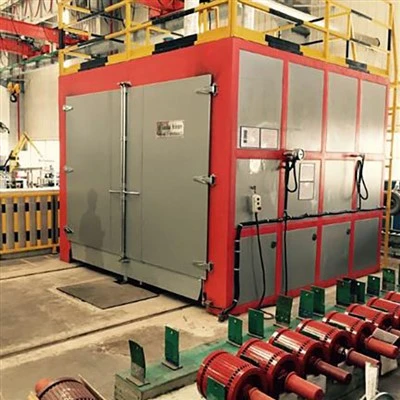
First, let’s cut to the chase: case hardening is all about “dual performance.” You don’t want a part that’s super hard and brittle all the way through—because that would chip, crack, or shatter under a sudden load, like when a car hits a pothole or a construction tool jolts mid-use. But you also don’t want a part that’s soft and ductile, because that would wear out fast, strip threads, or bend before it does its job. Pit furnace case hardening fixes that by giving parts a thin, rock-hard outer layer (the “case”) and a tough, flexible inner core (the “heart”) that can handle stress and impact. That’s the whole purpose, but let’s dive into why that matters for the parts you’re actually making.
Take a typical example: a tractor’s axle gear. If you make that entire gear from high-carbon steel, it’s hard enough to resist wear, but when it gets hit by a stone or a sudden torque shift, the whole gear will snap clean in two—no warning. If you make it from low-carbon steel, it’s tough enough to take a hit, but after a few months of turning, the teeth will wear down smooth, and the gear will stop working. Case hardening, done in a pit furnace, is the middle ground that solves both problems. The outer 0.5mm to 2mm gets carbon-rich (or nitrogen-rich, depending on the process) so it’s hard enough to resist abrasion, while the inside stays soft and bendable to absorb impact. That’s the core purpose, but there’s more to it than just that balance of hardness and toughness.
Now, why a pit furnace specifically? Because not every furnace is built for uniform case hardening. Pit furnaces are tall, cylindrical, and load parts vertically, stacked on metal trays inside a sealed chamber. That design means you can load a whole batch of 100 small bolts, 50 axle gears, or even a large gear shaft all at once, and every single part gets the same heat, same atmosphere, same carbon exposure. No hot spots, no cold edges—so every part comes out with the exact same case depth. For shops that do high-volume work, that consistency is non-negotiable. If even one part in a batch is under-hard, it will fail early, and if it’s over-hard, it will crack. Pit furnaces eliminate that guesswork, which is why they’re the go-to for most industrial case hardening runs.
Another big purpose: extending part lifespan without redesigning the part or switching to more expensive materials. Let’s be real—raw high-performance steel costs way more than standard steel. If you can take a cheap, easy-to-machine low-carbon steel part, case harden it in a pit furnace, and get the same lifespan as a $10/lb alloy steel part, you just cut your material costs by 70% or more. That’s a huge win for any business, especially when you’re making thousands of parts a month. I had a customer last year, a small automotive parts shop, who was using 4140 alloy steel for transmission gears and spending $12,000 a month on material. After switching to 1018 steel and case hardening in our pit furnaces, their material cost dropped to $3,500 a month, and their part failure rate went down by 12%. That’s the kind of ROI that makes pit furnace case hardening worth the investment, even if you have to add the cost of the furnace and the process.
Wait, but let’s not overlook a less obvious purpose: improving wear resistance in high-friction areas. Think about a knife blade? No, wait, industrial parts. A bearing, for example, spins thousands of times a minute, rubbing against another metal. If that bearing’s surface isn’t hard, it will develop tiny pits (called spalling) after a few thousand cycles, and the whole assembly will seize up. Case hardening adds a dense, smooth outer layer that resists that pitting. Pit furnaces do this consistently because the sealed chamber lets you control the atmosphere—you can add a carbon-rich gas (like natural gas or propane) to the furnace when it’s hot, so carbon diffuses into the part’s surface evenly. If you used an open furnace, that carbon would escape into the air, so parts on the edge of the load would get less carbon and be softer, and parts in the middle would get too much. Pit furnaces’ sealed design fixes that, so every bearing in a batch has the same wear resistance.
Then there’s impact resistance, which I mentioned earlier, but it’s worth repeating. A lot of parts aren’t just spinning or rubbing—they’re taking sudden hits. A construction excavator’s bucket pin, for example, has to hold the bucket to the arm, and every time you dig into dirt, that pin gets hit with thousands of pounds of force. If the pin was all hard steel, it would snap when you hit a rock. If it was all soft steel, it would bend. Case hardening gives it a hard surface to resist bending and abrasion, and a tough core to absorb the impact of those sudden hits. Pit furnaces are perfect for this because you can control the case depth—if you need a thicker case for a part that takes more impact, you can run it longer in the carbon-rich atmosphere, and the uniform heat means the case depth is the same all around the pin, even the spots that are exposed to the most force.
Now, let’s talk about common misconceptions. A lot of people think case hardening is just for “old-school” manufacturing, but no—even aerospace parts use it. Jet engine turbine blades? Wait, no, let’s get specific: the fasteners that hold turbine blades to the disk. Those fasteners have to resist wear from spinning and take high temperatures, but they also can’t be brittle. Case hardening in a pit furnace gives them that balance. Or medical devices? Wait, some surgical tools use case hardening too—tools that have to be sterile, resist corrosion, and last through hundreds of uses. The hard case resists corrosion, and the tough core means the tool won’t snap when you’re making a precise cut.
Another point: pit furnace case hardening is also great for parts that have complex shapes. If you have a gear with teeth cut into it, you don’t want the teeth to be too hard and brittle, but you do want them to be wear-resistant. Pit furnaces’ uniform heat means the teeth get the same case depth as the rest of the gear, so the teeth won’t chip when they mesh with another gear. If you used a different method, like flame hardening, you might over-heat the tips of the teeth and make them too hard, while the base of the teeth stays soft. That leads to chipped teeth and early failure. Pit furnaces avoid that because the entire part is heated evenly, so every surface gets the same treatment.
Let’s also cover the process briefly, because it ties into the purpose. When you load parts into a pit furnace, you seal the chamber, heat it to around 870°C (1600°F), and let carbon diffuse into the surface of the part for a few hours, depending on how deep you want the case. Then you quench the part—cool it quickly in oil or water—to harden the outer layer. The core stays soft because it didn’t get as much carbon, so it doesn’t harden when quenched. That’s the whole process, and it’s repeatable every time with a pit furnace. No surprises, no inconsistent results, which is exactly what shops need for mass production.
Now, why does this matter to you, if you’re the one buying the furnace or using the process? Let’s say you run a shop that makes custom parts for construction equipment. You’re probably dealing with parts that have to meet strict industry standards—OSHA, ISO, whatever applies. Pit furnace case hardening gives you the consistency to meet those standards every single time. If you’re making parts for a big OEM, they won’t accept a batch of parts where some are too soft and fail. Pit furnaces let you prove that every part in a batch has the exact case depth and hardness they require, which is a huge selling point for your business.
I’ve had so many customers come to me saying they were using a small box furnace, and their parts had a 5% failure rate after case hardening. When they switched to a pit furnace, that failure rate dropped to under 1%. That’s not a small number—5% failure means you’re throwing away 50 parts for every 1000 you make, which is a big cost. 1% failure means you’re only throwing away 10, which saves you time, money, and stress. And with pit furnaces, you can load way more parts at once than a box furnace, so your throughput goes up too. You can process a whole day’s worth of parts in one run, instead of multiple runs, which cuts down on labor time.
Wait, let’s not forget about sustainability. A lot of people don’t talk about that, but case hardening in a pit furnace is actually more energy-efficient than other methods sometimes? No, wait, let’s be real—furnaces use energy, but the consistency means you’re not reworking parts. Reworking a part is a waste of material, energy, and time. If your process has a high failure rate, you’re wasting all that on parts that don’t work. Pit furnaces’ consistency cuts down on rework, which is a win for the planet and for your bottom line.
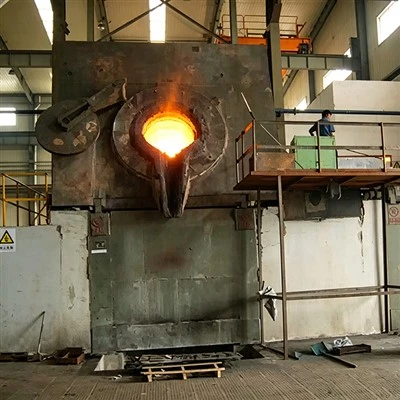
Let’s wrap this up to make sure we’re clear on all the purposes of pit furnace case hardening, because I’ve covered a lot here. First, it creates a dual-performance part: hard, wear-resistant outer layer and tough, impact-resistant inner core. Second, it’s cost-effective: you can use cheaper raw steel instead of expensive alloys, cutting material costs significantly. Third, it’s consistent: pit furnaces’ sealed, uniform heat means every part in a batch gets the exact same treatment, eliminating failure from inconsistent processing. Fourth, it’s versatile: it works for everything from small bolts to large gear shafts, and for industries ranging from automotive to aerospace to construction. Fifth, it extends part lifespan: parts last longer, which means less maintenance, fewer replacements, and happier customers.
Tempering Furnace If you’re still on the fence about whether pit furnace case hardening is right for your operation, or if you’re ready to upgrade your current furnace to get more consistent results, let’s talk. I’ve worked with hundreds of shops to find the right pit furnace setup for their specific needs, whether they’re running small batches of custom parts or high-volume industrial production. We can walk through your part designs, your production goals, and figure out exactly what setup will deliver the ROI you’re looking for. Don’t let part failures, high material costs, or inconsistent processing hold your business back. Let’s connect and talk through how pit furnace case hardening can help your parts perform better, last longer, and save you money.
References
- Totten, G. E., & Howes, M. (2002). Steel Heat Treatment: Equipment and Process Design. Marcel Dekker.
- American Society for Metals (ASM International). (2017). Case Hardening of Steel. ASM Handbook, Volume 4: Heat Treating.
- Davis, J. R. (Ed.). (1998). Surface Engineering for Corrosion and Wear Resistance. ASM International.
- Nalla, R. K., Boyce, B. L., & Ritchie, R. O. (2003). On the relevance of fracture mechanics to the fatigue of hard-soft microstructures in case-carburized steels. Metallurgical and Materials Transactions A, 34(10), 2659–2670.
Jiangsu Fangwei Furnace Industry Co., Ltd.
Jiangsu Fangwei Furnace Industry Co., Ltd. is one of the most professional pit furnace manufacturers and suppliers in China. With abundant experience, we are committed to providing high quality customized products with competitive price. Please feel free to buy advanced pit furnace made in China here from our factory.
Address: No.168, HuangNian Bridge, DaoShu Town, Danyang City, JiangSu Province, China
E-mail: fangwei@fwfurnaces.com
WebSite: https://www.fwfurnaces.com/
