If you work in electrical maintenance, construction, or industrial installations, you know how critical verifying power cable voltage is to keeping jobs safe and on schedule. Last quarter, I had a customer reach out to me in a panic after a routine installation went sideways—they’d misread their multimeter and misidentified a 240V circuit as 120V, nearly injuring a technician who reached into the panel to connect equipment. That incident stuck with me, because it’s not just a mistake; it’s a preventable one that boils down to understanding two core tools: the multimeter and the power cable tester. As a power cable tester supplier, I’ve spent years helping teams pick the right tool for the job, and today I’m breaking down exactly how they work, when to use each, and why mixing them up can cost you time, money, or even safety. Power Cable Tester
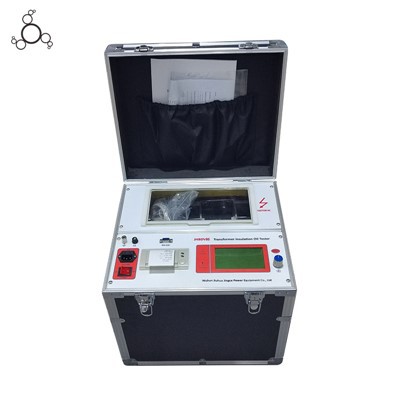
First, let’s get clear on what each tool is and what they’re designed for. A multimeter is a versatile, handheld device that measures multiple electrical properties: voltage, current, resistance, continuity, and even frequency, depending on the model. You’ve probably seen one before—usually a plastic unit with a display, a dial to select settings, and two test leads. It’s a jack-of-all-trades, built for troubleshooting individual circuits, checking small components, or verifying basic power flow. A power cable tester, on the other hand, is purpose-built for cables: it’s a specialized tool designed specifically to test the integrity of insulated power cables, check for voltage presence, locate breaks or faults in the insulation, and confirm whether a cable is live before you work on it. It’s not a general-purpose tool, but that specialization makes it far more reliable for high-stakes cable testing.
Let’s start with how each tool works in practice, starting with the multimeter, since it’s the one most people reach for first. To test power cable voltage with a multimeter, you first set the dial to the correct AC or DC voltage range—this is make-or-break. If you set it to a 200V range for a 480V industrial cable, you’ll either get a wonky reading that’s too low, or you could damage the multimeter and get a dangerous shock. Next, you need to make solid contact with the cable’s conductors: for insulated cables, you’ll have to strip a small section of insulation (about ½ inch is standard) on both the hot (live) and neutral conductors, then touch the multimeter’s red lead to the hot and black lead to the neutral or ground. If the display shows a reading matching the expected voltage (for a US home, that’s 120V or 240V; for industrial sites, 208V, 277V, or 480V), the cable is live. If it shows 0V, it’s de-energized.
But here’s the thing: multimeter testing has big limitations when it comes to cables. First, you have to strip insulation to make contact, which means exposing a live conductor to accidental touch—something no technician wants to do. Second, multimeters can give false readings: if a cable has a broken conductor or high resistance in the insulation, the multimeter might pick up stray voltage from nearby circuits and give a misleadingly high reading. I’ve seen this happen to electricians working in old industrial buildings with bundled cables; a multimeter would read 120V on a cable that was actually dead, because it was picking up voltage from an adjacent live line. Third, multimeters only test voltage at the point where you’re making contact—they can’t tell you if the entire cable has a consistent voltage along its length, or if there’s a fault hidden under the insulation you can’t see.
Now, how to test power cable voltage with a power cable tester, which solves a lot of those problems. A good power cable tester works in two main ways: first, non-contact voltage testing (NCV) mode, which lets you hold the tester near the cable’s insulation to detect voltage without stripping it. That’s a game-changer for safety—you never have to expose a live conductor to check if it’s hot. Second, continuity testing mode, which sends a low-voltage signal through the entire cable to confirm that conductors are intact and that the cable is de-energized, even if there’s stray voltage nearby. Let’s walk through a typical use case for a power cable tester with a 120V residential power cable: first, you turn the tester to the AC voltage setting, hold the sensor tip ¼ inch away from the outer insulation of the cable, and move it along the length. If the tester beeps and lights up, the cable is live; if not, it’s safe. For longer runs, like a 50-foot cable running from a breaker panel to an outlet, you can also use the tester’s tone generator mode: plug the tone generator into the breaker end, then use the receiver at the outlet end to confirm the circuit matches, so you don’t accidentally test the wrong cable.
The key differences between the two tools come down to safety, accuracy, and speed, and the right choice depends entirely on what you’re testing. For quick, basic checks—like verifying a wall outlet is outputting 120V before plugging in a lamp—a multimeter works fine. It’s small, easy to carry, and you can have it on hand for all sorts of electrical tasks. But for any power cable testing that involves working on high-voltage cables, long cable runs, or cable that’s been installed for years (and might have hidden insulation damage), a power cable tester is the better pick. Let me give a real example from a client of mine last year: a commercial electrical contractor was installing 480V feeder cables for a new warehouse. They tried using their multimeter to test each cable, stripping insulation at both ends to check voltage, and missed a small pinhole in the insulation that led to a short circuit 10 feet into the cable. When they turned on the power, the short fried two breakers and required a full re-test of all cables. If they’d used a power cable tester, it would have picked up that insulation fault before they energized the cable, saving them thousands in downtime and repairs.
Another common mistake people make is thinking a multimeter is “more accurate” than a power cable tester. While multimeters have precise voltage readings, they only measure at the point of contact. A power cable tester, by contrast, is designed to test the entire cable’s condition—so if there’s a weak spot in the insulation or a broken conductor anywhere along the run, it will detect it, even if the multimeter gives a normal reading at the ends. For technicians working on temporary cable runs, like event power or construction site cables, this is non-negotiable: those cables get dragged, stepped on, and exposed to moisture, so hidden faults are a constant risk.
I also want to address a question I get all the time: can I use a multimeter to test a power cable if I don’t have a power cable tester? Technically, yes, but only if you take strict safety precautions. Never test a high-voltage cable with a consumer-grade multimeter—stick to professional-grade models rated for the voltage you’re working with. Always wear insulated gloves, use insulated wire strippers, and make sure your multimeter is calibrated within the last year (calibration is a big part of accuracy that many people forget). But even with all that, there’s still a risk: last year, a technician I work with was testing a 277V cable with a multimeter, and when he touched the lead to the hot conductor, the lead slipped, and he got a minor shock. That slip would have been far less likely with a power cable tester, which lets you test without exposing the conductor.
So, when should you use which? Let’s break it down by use case:
- Use a multimeter when: You’re testing small circuits (residential outlets, phone lines, low-voltage wiring), checking component resistance for troubleshooting, or performing quick voltage spot checks where safety protocols let you expose conductors.
- Use a power cable tester when: Testing insulated power cables (especially runs over 10 feet), checking for live voltage without stripping insulation, verifying cable integrity for high-voltage systems (240V and above), locating hidden cable faults, or working in industrial or construction settings where cables are exposed to damage.
As a power cable tester supplier, I’ve seen teams cut corners by using multimeters for cable testing, and the results are rarely good. But I’ve also seen teams invest in good power cable testers and avoid costly mistakes. The right tool doesn’t just make the job easier—it keeps you and your team safe. If you’re currently relying on multimeters for all your power cable voltage testing, or if you’re looking to upgrade your testing tools to reduce risk and improve accuracy, I’m here to help. We offer a range of power cable testers for every application, from residential use to industrial high-voltage testing, and our team can walk you through which model is right for your needs. Feel free to reach out to our team to discuss your testing requirements, compare options, and get the support you need to keep your projects safe and compliant.

Before I wrap up, I want to leave you with a quick safety reminder that’s stuck with me from my first year in this industry: never rely on a single test. Whether you use a multimeter or a power cable tester, always double-check, especially when working with power cables. Stray voltage, faulty test leads, or misdials can all lead to dangerous mistakes. And if you’re ever unsure which tool to use, when to use it, or how to test your cables correctly, don’t guess—reach out to an expert, like the team here.
CT PT Analyzer References
- Occupational Safety and Health Administration (OSHA). Electrical Safety-Related Work Practices. 29 CFR 1910.331-1910.335.
- Underwriters Laboratories (UL). Standard for Safety for Electrical Test Equipment, UL 61010-1.
- National Electrical Code (NEC). Article 110.3: Safety-Related Work Practices for Electrical Installations.
- International Electrotechnical Commission (IEC). Standard for Electrical Measuring Equipment, IEC 61557.
Wuhan Jiuhua Jingce Power Equipment Co., Ltd.
As one of the most experienced power cable tester manufacturers in China, we offer a wide range of products with superior quality. Please feel free to wholesale bulk durable power cable tester from our factory. For price consultation, contact us.
Address: 601,Unit 1,Building D4-02,Optics Valley Center,303 OpticsValley Avenue,Wuhan
E-mail: market@wuhanjhjc.com
WebSite: https://www.powertransformertester.com/
