If you’ve ever stood in the skincare aisle scrolling through eye cream prices, wondering why one tube costs $10 and another $100, you’re not alone. As an eye cream tube supplier of 12 years, I’ve heard this question from small brand founders and luxury skincare reps alike—all wanting to know how a tube’s price ties to its quality, without overpaying for empty brand marketing. The truth is, the price of an eye cream tube isn’t just a number on a label; it’s a snapshot of the choices we make as suppliers to deliver a container that protects fragile eye area formulas, feels premium, and stands up to repeated use. Let’s break down how to judge a tube’s quality by its price, so you can make smarter choices whether you’re a brand building a line or a consumer picking a product that works. Eye Cream Tube
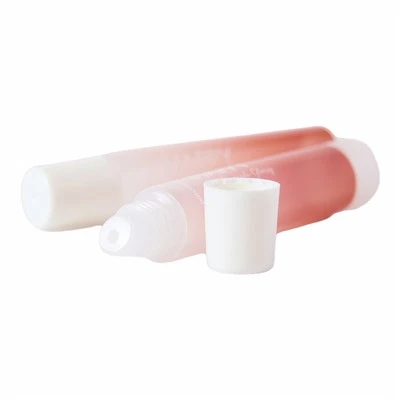
First, let’s start with the basics: not all plastic is created equal, and that’s where 30-40% of a tube’s production cost lives, depending on the type. For lower-priced tubes (under $10 total, for both tube and assembly), suppliers typically use a standard polyethylene terephthalate glycol (PETG) plastic that’s rigid enough but not meant for long-term protection. This plastic is thin—so thin you can bend it with one finger, or squeeze it until it warps. For eye cream, which often contains active ingredients like retinol or vitamin C that break down when exposed to light or air, this thin plastic doesn’t offer enough barrier protection. A $10 eye cream tube might let in UV rays, turning a potent retinol formula inactive within 6 months, or let air seep in, causing the cream to oxidize and irritate delicate under-eye skin.
Now, compare that to a mid-priced tube (ranging from $10 to $25). Here, suppliers start using high-density polyethylene (HDPE) or multi-layer plastic structures. Multi-layer tubes have 3-5 layers: an outer layer for branding, a middle barrier layer to block light and air, and an inner layer that doesn’t react with the eye cream formula. This extra layer is where the cost goes—multi-layer production requires specialized machinery that bonds the layers without gaps, a step we added to our own factory in 2018 after hearing too many brand complaints about formulas going bad before their expiration date. I remember one small brand that switched from a $8 single-layer tube to a $15 multi-layer tube and saw their product shelf life jump from 6 months to 18 months. For them, that meant no more wasted inventory from expired stock, and happy customers who didn’t complain about ineffective formulas. The quality here is clear: the tube is thicker, sturdier, and designed to protect what’s inside.
Top-tier eye cream tubes (priced $25 and up) take that barrier protection even further. Many luxury brands and clinical skincare lines opt for aluminum laminated tubes or glass tubes with precision pump dispensers. Aluminum laminated tubes have an extra aluminum layer that is completely light and air-proof—so effective, in fact, that many prescription eye creams use them. Glass tubes add another level: they’re non-porous, so there’s zero chance of the tube material leaching into the formula, which is a big concern for brands using natural or organic ingredients. We worked with a clinical skincare brand last year that needed a glass tube for their eye cream because their formula included peptide compounds that react with plastic. The cost of that tube was $32 per unit, but the brand knew it was worth it to back up their clinical claims of collagen-boosting results. For consumers, a top-tier tube feels substantial when you hold it in your hand—no flimsy plastic, no cheap seams, and often a pump that dispenses exactly the right amount of cream every time, instead of a flip-top cap that lets too much air in every time you open it.
Next, let’s talk about the functional parts of the tube—the cap, the seal, and the applicator—all of which shift the price based on quality. For lower-priced tubes, caps are usually basic plastic, often paired with a simple induction seal that’s easy to peel, but can tear if you’re not careful. This leads to opened tubes that might not be resealed properly, another way air gets in. I once had a customer return 200 tubes because their cap was loose—they said customers were throwing away half the product because the cream would dry out if the cap wasn’t snapped closed all the way. For mid-priced tubes, caps are thicker, often with a screw-on design that clicks into place, and the induction seal is more durable, so you can reseal the tube easily after each use. We also add a tamper-evident band to mid-priced tubes now, which is a small cost but a big trust builder for consumers. Top-tier tubes take this to the next level: many have soft-touch caps that feel luxurious, or even a metal cap for a high-end finish. Some include a built-in roller applicator, which is a game-changer for eye cream—cool metal rollers reduce puffing in the morning, and they add $5-$10 to the tube’s cost, depending on the quality of the metal. A lot of brands I work with will add that roller to a $25 tube, knowing it adds both function and perceived value.
Another often-overlooked factor in a tube’s price is production and environmental standards. In the past, many low-priced tubes were made in factories with lax quality control, leading to issues like misaligned seams, leaking during shipping, or inconsistent fill levels. I visited a small supplier in Southeast Asia a few years ago that had a lot of rejected tubes because the machinery would misalign the inner layer, causing leaks in 10% of units. They were cutting corners on maintenance, which saved them a few cents per unit but cost brands thousands in returns. Mid-priced and top-tier tubes are usually made in factories with ISO 9001 or GMP certifications, meaning they follow strict quality checks at every step: every tube is inspected for seams, every cap is tested for tightness, every fill level is measured. We do a 100% inspection of all our tubes before they ship, which adds about 2 cents per unit to the cost, but it’s worth it—our return rate for tube defects is less than 0.5%, compared to the industry average of 2% for lower-priced tubes. For brands, that means less inventory waste, and for consumers, it means a tube that won’t leak all over their makeup bag. For consumers, this translates to peace of mind: a higher-priced tube is less likely to have defects that ruin their experience, even if the cream itself is good.
Wait, but what about branding? A lot of people think a $50 eye cream tube is just for the fancy logo, and there’s some truth to that, but not as much as you might think. The cost of printing and labeling is a small part of the total—usually 10-15% of the tube’s price. A brand might pay more for a foil stamp or embossed logo, but that’s about the finish, not the tube’s quality. For example, we made a tube for a celebrity brand last year that had a gold foil stamp and a soft-touch cap; the tube cost $28 per unit, which included the multi-layer plastic, the soft-touch cap, and the printing. The logo was a small part of that cost. On the flip side, a lower-priced tube with a colorful, printed label is still flimsy plastic— that’s a marketing cost, not a quality cost. So when you’re judging quality by price, don’t fixate on the logo; pick up the tube, squeeze it a little, feel the cap, and check the layers if you can. A thick, rigid tube with a tight cap is a sign of quality, regardless of the label.
Let’s also talk about formula compatibility, which is tied directly to the tube’s material. If a brand uses a retinol eye cream, they need a tube that can hold retinol without the material reacting with it. Retinol is sensitive, and if the tube’s plastic has additives, it can break down the retinol, making it ineffective or even irritating the skin. Lower-priced tubes often use recycled plastic that has leftover chemicals from previous uses, which can react with active ingredients. Mid-priced tubes use virgin plastic (not recycled) that’s been tested for formula compatibility, and top-tier tubes use aluminum or glass, which are non-reactive for even the most delicate formulas. I’ve seen brands switch to lower-priced tubes and have their retinol formulas cause redness—turns out the recycled plastic leached a small amount of BPA, which irritated sensitive under-eye skin. That’s a big risk for small brands, and it’s one that higher-priced tubes avoid. For consumers, that means a higher-priced tube is less likely to cause skin reactions, because the material is safe for the formula inside.
Now, for both brands and consumers, here’s a practical way to apply this: if you’re a brand looking to order eye cream tubes, ask your supplier for a sample first. Squeeze it, bend it, check the layers, test the cap for tightness. If a supplier won’t send a sample, that’s a red flag—we always send samples for free, because we know you need to feel the quality before you commit. For consumers, if you’re looking at an eye cream, pick up the tube (if you’re in a store) and compare: a $10 tube will feel thin, a $20 tube will feel thick, a $50 tube will feel heavy and substantial. If it’s a glass tube, that’s a top-tier choice, and if it has a roller applicator, that’s a functional upgrade.
I want to be clear: price doesn’t always equal quality, but for eye cream tubes, the correlation is strong because the cost is tied directly to the materials and construction that protect the product. You can find a mid-priced tube ($12-$18) that’s high quality—we sell a 4-layer tube with a screw cap and tamper band for $14 per unit, and it works perfectly for most formulas. You don’t always need a $30 tube unless you’re using a very sensitive formula like peptides or prescription-grade actives. The key is to understand what you’re paying for: thicker plastic, better barrier protection, more durable caps, and strict quality checks—all of which add up to a tube that keeps your eye cream effective and your customers happy.

At the end of the day, as an eye cream tube supplier, our job is to give brands a choice: we have tubes for every budget, all with a focus on quality that shows in the final product. Whether you’re a small brand starting out on a tight budget or a luxury brand building a high-end line, the quality of the tube matters as much as the formula inside. If you’re looking to source eye cream tubes that balance cost, quality, and function, reach out to our team to discuss your needs, request samples, or get a custom quote tailored to your brand. We’re here to help you pick the right tube for your product, no matter your price point.
Lip Balm Tube References
- International Standard Organization (ISO). (2020). ISO 9001: Quality Management Systems Requirements.
- Personal Care Products Council. (2021). Barrier Properties of Cosmetic Packaging Materials.
- Journal of Cosmetic Science. (2019). The Impact of Packaging on Active Ingredient Stability in Skincare Products.
- U.S. Food and Drug Administration (FDA). (2022). Packaging Material Compatibility Guidelines for Topical Dermatological Products.
- Plastic and Reusable Packaging Association. (2020). Multi-Layer Plastic Packaging for Sensitive Cosmetic Formulas.
Unic Packaging International Ltd.
With abundant experience, we are one of the most professional eye cream tube manufacturers and suppliers in China. We warmly welcome you to wholesale custom made eye cream tube at competitive price from our factory. Good service and quality products are available.
Address: RM1501, Unit 1, Building7, BaoLiLuoLanXiangGu Estate, DingQiao, HangZhou, China
E-mail: sales@unicgreenpack.com
WebSite: https://www.unicgreenpack.com/
