Alright, let’s cut to the chase—if you’ve been in the robot game for more than 5 minutes, you know the core components are the unsung heroes of the whole show. I’ve been supplying these parts for 8 years now, and let me tell you, the last couple years have been wild. Everyone’s talking about robot automation, but no one’s geeking out over why those bots actually work. That’s my lane, and today I wanna spill on where this whole thing is headed—especially since I’m knee-deep in it every single day. Robot Core Component
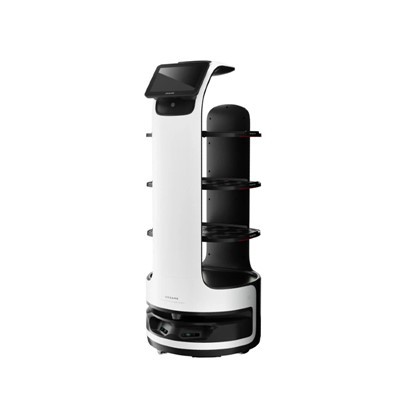
First off, let’s be real: when people say “robots,” they picture a sleek arm on an assembly line or a delivery bot rolling down the sidewalk. But strip that back, and every single one runs on four core things: motors, sensors, controllers, and power systems. That’s it. No fancy AI gimmick can save a bot if its motor’s stalling mid-task, or its sensor can’t tell a screw from a dust bunny, or its controller’s lagging so bad it crashes into a wall. I’ve seen it happen, and it’s not pretty.
So what’s next for these parts? Let’s start with motors, because that’s the workhorse everyone overlooks. Right now, most industrial robots use servo motors—they’re reliable, but they’re bulky, power-hungry, and pretty rigid. The future? It’s tiny, lightweight, high-torque motors that can pack more punch in a smaller frame. Wait, you might’ve heard about piezoelectric motors or ultrasonic motors—yeah, those are gaining traction, especially in collaborative robots (cobots) that work side-by-side with humans. Why? Because they’re super precise, no gears, so less maintenance, and way safer if they bump into someone. But here’s the catch—right now they’re expensive. As demand ramps up, I’m seeing mass production knock 30-40% off their price tag in the next 3 years, easy. And for mobile robots? We’re talking about motors that can adjust speed and direction in microseconds, using AI to tweak torque on the fly. I’ve already got a prototype line rolling out to a couple of logistics clients, and they’re blown away by how their bots stopped getting stuck in tight warehouse aisles.
Next up: sensors. This is where robots “see” and “feel” the world, and it’s changing faster than any other part. LIDAR was the big buzzword for a minute, but now everyone’s mixing it with vision sensors, thermal cameras, and even tactile sensors. Wait, tactile sensors—those are the ones that let a robot “feel” an object, like gripping a fragile glass without shattering it. Right now, most tactile sensors are clunky, but we’re working on flexible, skin-like sensors that can stretch and conform to any shape. Think about cobots working in electronics manufacturing—they can handle tiny circuit boards without damaging them, or even in healthcare, where a surgical robot needs to hold tissue just right. And for outdoor robots? Weatherproof, dust-proof sensors that don’t fog up or get clogged with dirt. I’ve tested a new vision sensor that uses AI to identify objects in 0.1 seconds, even in heavy rain—game changer for delivery bots.
Then there’s the controller, the brain of the operation. Right now, most controllers are big, centralized boxes that run an entire robot, but the future is distributed, edge computing controllers. That means the “brain” is actually built into the individual components, so a motor can adjust itself, a sensor can process its own data, and they all talk to each other in real time without waiting for a central server. No lag, no downtime if one part goes wonky. For small robots, this is huge—you can fit a controller the size of a thumb, and it’s way more efficient. I’ve been supplying these edge controllers to a startup making tiny agricultural robots that pull weeds—they don’t need to send data to a cloud; they process it on the spot and yank the weed in 0.2 seconds. Way faster than old systems that had to wait for a server response.
Power systems—let’s not sleep on this, because a robot is only as good as its battery. Lithium-ion has been king, but it’s hitting limits. The future is solid-state batteries that charge way faster, last 2-3 times longer, and are way safer (no exploding if they get damaged). And not just batteries—energy harvesting. Imagine a delivery bot that charges itself while rolling, using kinetic energy from its wheels or even solar panels on its body. For industrial robots, that could mean they never have to stop to charge during a 12-hour shift. I’ve got a client in the e-commerce space testing a bot with kinetic energy harvesting, and they’re already seeing 20% longer run times between charges.
But wait, it’s not just about the tech itself—it’s about how these components work together. Right now, a lot of robot manufacturers have to source parts from 5-10 different suppliers, which leads to compatibility issues, delays, and extra costs. That’s where I see my company (and a lot of core component suppliers) heading: integrated solutions. We’re not just selling a motor or a sensor; we’re selling a package that’s pre-calibrated, works seamlessly with each other, and plugs straight into a robot’s frame. No more spending weeks trying to get a motor and sensor to talk. That’s a big win for small to mid-sized robot makers who don’t have huge engineering teams to customize parts.
Now, let’s get real about the hurdles. Cost is still a big one—new tech like solid-state batteries and flexible tactile sensors aren’t cheap yet. There’s also the issue of standardization. Right now, every manufacturer uses slightly different specs, so a motor made for a cobot won’t fit a mobile robot without major modifications. If we can get global standards for core components, that’ll speed up adoption big time. And don’t forget about supply chains—post-pandemic, everyone’s scared of delays, so suppliers who can make parts locally, fast, will have a huge edge. That’s why we’ve been ramping up our domestic production lines, cutting lead times from 8 weeks to 2 weeks for most parts.
Who’s driving this demand? Let’s see—industrial automation is still the biggest, but cobots are exploding (they grew 25% last year, per the numbers I track), logistics and delivery bots, agricultural robots (to fix labor shortages), even medical robots. The pandemic accelerated everything—companies realized they couldn’t rely on human labor for repetitive or dangerous jobs, so they turned to robots. And now, every industry is looking to automate, which means more need for better core components.
I wanna be honest here—this isn’t some far-off sci-fi future. A lot of the stuff I’m talking about is already in testing, and within the next 5 years, you’ll start seeing these parts in the robots you interact with every day. A kid’s toy robot that doesn’t run out of batteries after 10 minutes, a delivery bot that can navigate a crowded sidewalk without crashing, a cobot that helps your local mechanic fix a car.
But here’s the thing—all this cool tech is only as good as the supplier behind it. I’ve worked with robot makers who go for the cheapest parts and end up with bots that break down every week, costing them way more in the long run. That’s why focusing on quality, reliability, and customization is key. We don’t just build parts—we work with our clients to tailor components to their exact needs, whether that’s a motor that runs 24/7 for a factory or a tiny sensor for a surgical robot.

If you’re a robot maker, an engineer, or someone just curious about where this is all going, let’s chat. I’ve got engineers on staff who can walk you through prototype parts, discuss your needs, and help you build a better robot. No sales jargon, no hidden fees, just straight talk about what works and what doesn’t. The future of robots starts with their core components—don’t settle for parts that’ll hold you back. Hit us up to connect and talk shop.
Kids Companion Robot References:
- International Federation of Robotics. (2023). World Robotics Report: Industrial Robots.
- Berg Insight. (2024). Collaborative Robots Market Trends & Forecasts.
- Tesla Energy. (2023). Solid-State Battery Development Roadmap.
- IEEE Robotics and Automation Society. (2022). Edge Computing for Robotic Systems.
- National Institute of Standards and Technology. (2023). Standardization of Robot Core Components.
Hangzhou Janz Intelligent Technology Co., Ltd.
As one of the most professional robot core component manufacturers and suppliers in China, we offer a wide range of products with superior quality. Please feel free to buy advanced robot core component at competitive price from our factory. Contact us for quotation.
Address: Room 240, 2nd Floor, 289-16, Creative Road, Yinhu Street, Fuyang District, Hangzhou City, Zhejiang Province
E-mail: amy@hzjanz.com
WebSite: https://www.simplexrobots.com/
