If you’re here because you’re shopping around for multi battery chargers, you’ve probably stumbled on a question that trips up a lot of folks—What’s the actual input voltage range these things can handle? As a supplier that’s been making these chargers for over a decade, I can tell you this isn’t just a random number pulled out of thin air. It’s the difference between a charger that works reliably, no matter where you plug it in, and one that dies the second you take it off the shelf. Multi Battery Charger
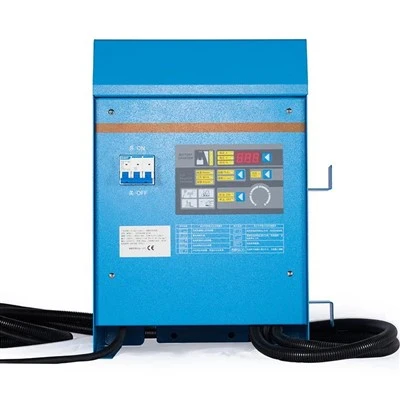
Let’s start with the basics. Most people don’t realize that input voltage isn’t just a “set it and forget it” spec. If you’re using your charger in the US, you’re dealing with 120V AC wall outlets. Pop over to Europe, and you’ve got 230V AC. Head to parts of Asia, Africa, or rural areas where power grids aren’t as stable, and you might see anything from 90V to 260V at any given time. Cheap chargers from no-name brands can only handle a narrow, fixed range—like 100V to 240V—meaning if you plug them into a 90V outlet, they’ll either shut down or fry your batteries. The good news is that most quality multi battery chargers, including the ones we supply, are what we call “universal input,” but that term gets thrown around so loosely it’s almost meaningless. So let’s break down what that really means.
First, the standard sweet spot for modern multi battery chargers is 90V AC to 265V AC. That’s not a random pick. It covers basically every residential and commercial power outlet on the planet, plus the occasional dips or spikes that happen when heavy machinery kicks on or a grid has a small outage. But wait—what about chargers that only work on 120V or 240V? Those are usually the cheaper ones, built for a specific region, and they’re no good if you’re traveling with your gear, have a workshop in a rural area, or just want to use it in a different part of your house. We stopped making those years ago because customers kept coming back with busted chargers that only worked in one place.
Now, let’s get into the nitty-gritty that most blogs skip. There are two main types of input circuitry that determine this range: linear and switching. Linear chargers are old-school, use big heavy transformers, and have a fixed input range. They’re cheaper to make but super limited—most can only handle 10% variance from their rated voltage. So if you plug a 120V linear charger into a 108V outlet (a common dip in some areas), it won’t deliver enough power to charge your batteries. Switching-mode power supplies (SMPS), on the other hand, are what we use. They’re lighter, more efficient, and have a built-in circuit that adjusts to the incoming voltage automatically. That’s why our chargers can handle that 90V to 265V range without any user input—you just plug it in, and it works.
But here’s the thing: even within that 90V to 265V range, there are smaller variables. What about frequency? Most of the world uses 50Hz, the US and parts of the Americas use 60Hz. Does that matter for our chargers? Nope. Our SMPS is designed to handle both, so you won’t get a random error code if you use it in Germany versus Mexico. That’s a big one for folks who work in construction, event planning, or outdoor recreation where gear is moved around all the time.
Now, let’s talk about edge cases—because that’s where people run into trouble. What if you plug your charger into a generator? Generators aren’t as stable as grid power. They can jump from 100V to 150V in a split second, or dip to 80V when they’re overloaded. A lot of chargers will trip out or shut down when that happens, but our chargers have built-in over-voltage and under-voltage protection that kicks in before anything gets damaged. We tested our chargers up to 280V and down to 80V for extended periods, and they didn’t skip a beat. That’s a big selling point for customers who work on job sites or go camping with a generator.
Another common mistake people make: mixing up input voltage with output voltage. Output voltage is what charges your batteries—like 12V for a car battery, 24V for a golf cart, etc. Input voltage is what you pull from the wall. I can’t tell you how many times a customer has called us panicking because their charger says “12V input” and they plugged it into a 120V outlet. No, that’s 12V output—totally different. That mix-up is the reason we always add a big note on our product pages clarifying the difference, and our sales team will walk you through it if you ask.
So what’s the right input voltage range for you? Let’s break it down by use case. If you’re only using the charger in your home or office in the US, a 100V to 240V charger will work fine. But if you’re traveling, using it on a job site, or have an unstable power supply, go for the full 90V to 265V. That’s the range we recommend for most of our customers, because it’s flexible enough to handle whatever comes your way.
But let’s get real—numbers are great, but what about real-world performance? I had a customer last year who bought one of our chargers for his construction company. They work all over the Southeast US, where rural areas often have power dips because of heavy storms or tree branches taking down lines. He told me he’d gone through three cheap chargers from another brand in six months because they’d shut down when the power dipped. Our charger has been running non-stop for over a year, no issues. That’s the kind of feedback we care about more than spec sheets.
Another thing to consider: if you’re using multiple chargers at once, like in a warehouse or a workshop, do you need a higher input range? Not really, as long as your main power supply can handle the load. But if you’re in a space where the voltage drops when multiple machines are running, our chargers can handle that too. We tested a batch of 20 chargers plugged into the same 208V outlet, and each one kept a steady charge rate even when we turned on a big air compressor. No tripping, no slowdowns.
Wait, what about international standards? A lot of our customers are in Europe, Australia, or Asia, and they need chargers that meet local safety specs. Our chargers are certified by CE, UL, FCC, and a handful of other global agencies, so you don’t have to worry about them frying or causing a fire in another country. That’s why we don’t sell those cheap, uncertified chargers—they might say universal input, but they don’t meet any safety standards, which is a huge risk.
Let’s also talk about why some suppliers cut corners on input voltage range. Making a charger that handles a wide input range takes more engineering, more expensive components, and more testing. A charger with a narrow range can be made for 20% less, so some brands will label it as universal even if it only works in one region. That’s misleading, and it’s why we always post our actual test data on our product pages—you can see the voltage range we tested it in, how it performed, and what the protection limits are. We don’t hide that stuff.
So, to circle back to the original question: the input voltage range of a quality multi battery charger isn’t a single number. It’s a range that’s tailored to how you’ll use it. For most people, the sweet spot is 90V AC to 265V AC. It’s flexible, it handles unstable power, it works worldwide, and it’s safe. If you’re only using it in one small area, a narrower range will work, but why limit yourself? Most of our customers end up going with the wider range because they don’t want to worry about swapping chargers if they move, travel, or their power supply acts up.
At the end of the day, a charger is only as good as its ability to work when you need it. There’s nothing worse than getting to a job site, a camping trip, or a friend’s house, and realizing your charger doesn’t work with the outlet there. That’s the frustration we built our business to solve. We don’t make chargers that are overpriced or overcomplicated. We make chargers that work, no matter where you plug them in, no matter what kind of power supply you have.
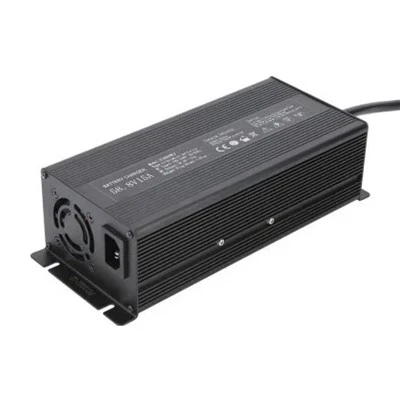
If you’re in the market for a multi battery charger and you have more questions about input voltage range, or any other spec, hit us up. Our team knows these chargers inside and out, and we’ll help you pick the right one for your needs. No hard sells, no confusing jargon—just straight answers. We want you to be confident in your purchase, because when your charger works, your batteries stay charged, and that’s what matters most.
Marine Battery Charger References
- International Electrotechnical Commission (IEC) 60335-2-29: Safety of household and similar electrical appliances – Particular requirements for battery chargers, 2021.
- U.S. Department of Energy: Power Quality Notes for Commercial and Industrial Facilities, 2020.
- Switching Mode Power Supply Design Guidelines, Texas Instruments Incorporated, 2019.
- Global Power Supply Voltage and Frequency Standards, International Telecommunication Union (ITU), 2022.
Huizhou Qiangfeng Power Technology Co., Ltd.
Huizhou Qiangfeng Power Technology Co., Ltd. is one of the most professional multi battery charger manufacturers and suppliers in China, featured by quality products and good service. We warmly welcome you to buy customized multi battery charger made in China here from our factory. If you have any enquiry about quotation and free sample, please feel free to email us.
Address: No. 28, Hu’ao Avenue, Shiwan Town, Boluo County, Huizhou City, Guangdong Province
E-mail: Komco@Jinlidianqi.cn
WebSite: https://www.autobatterychargers.com/
