As a supplier of CNC bending machine follow-up material support machines, I’ve spent the last 12 years standing shoulder-to-shoulder with sheet metal fabricators, weld shop managers, and maintenance techs who’ve stared down a line of dented parts, delayed production deadlines, and thousands of dollars in lost revenue because a critical piece of their equipment failed. Most people outside metal fabrication don’t realize how unforgiving consistency is in this space: when a CNC bending machine runs at full speed, every 0.1 seconds counts, and even the smallest glitch in a follow-up support system can derail an entire shift. What I want to break down today is the diagnostic function our machines perform specifically for fault scenarios—because that’s the part that doesn’t make it into marketing brochures, but is the exact reason fabricators keep coming back when their current support systems fall short. CNC Bending Machine Follow-up Material Support Machine
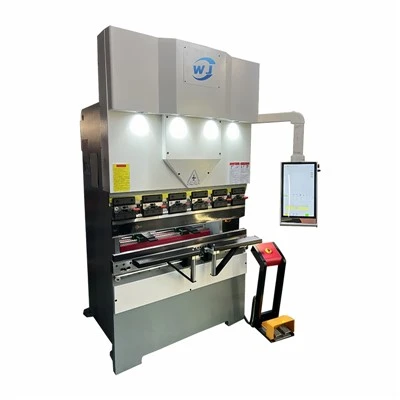
First, let’s ground this in how a CNC bending machine works, and why follow-up material support matters. A CNC bending machine uses a hydraulic or electric ram to press a sheet metal part against a die, creating precise angles that are non-negotiable for everything from HVAC ductwork to automotive chassis panels, medical device enclosures, and agricultural equipment components. The follow-up material support machine is the unsung hero here: it sits on the side of the bending brake, extends custom-matched arms to cradle the far end of the metal part as it’s being bent, keeping it aligned, steady, and free from flexing or sagging. Without this support, long parts (think 10-foot gutter sections or 8-foot chassis rails) will droop under their own weight, leading to inconsistent bend angles, surface scratches, or even parts that snap mid-bend. That’s not just a quality issue—it’s a production stopper.
Now, when a fault hits during this process, that’s where the diagnostic function of our follow-up machine kicks in, and it’s not just a “warning light.” Let’s walk through a real example I encountered last quarter with a fabricator in Cleveland who makes commercial kitchen hoods. They were running 5-foot stainless steel hood sides on their existing bending system, and every third part they ran had a slight twist at the far end, which was causing a 12% scrap rate and 2 hours of rework daily. Their old support system was a basic manual arm that a tech had to adjust every 10 parts, so I asked them to swap in our machine for a test run. Within 10 minutes of the first cycle, our machine’s diagnostic module flagged a fault: the right-side support arm was extending 1.2 inches shorter than the programmed length, even though the operator had input the correct part dimension.
That’s the kind of granular diagnostic data most support machines can’t provide. Our system doesn’t just say “fault detected”—it pinpoints exactly where the fault occurs, in real time, during the bend cycle. Let’s break down the core diagnostic functions our machines perform when faults pop up, because each one is tailored to stop production losses before they snowball.
First, real-time position monitoring and fault isolation. When a CNC bending machine is operating, it sends position data from its ram, back gauge, and support system to the main controller at 50 times per second. Our follow-up material support machine integrates directly with that controller, so it’s not working in a silo. If, for example, a linear encoder on the left support arm is misaligned after a part change, our system will track that the arm isn’t reaching the programmed extension within 0.05 millimeters during the “pre-bend hold” phase. Instead of the operator having to hunt through a 100-page controller manual to figure out why the part is slipping, the diagnostic module displays a specific error code: “Support Axis 1 Position Deviation > 0.05mm Cycle 72.” That’s not vague. For the Cleveland hood fabricator, that error code let their maintenance tech swap the faulty encoder in 15 minutes, instead of the 2 hours they’d spent troubleshooting with their old system. We later calculated that this single diagnostic function saved them $12,000 in scrap and rework that month alone.
Second, load and pressure anomaly detection for fault root cause analysis. A lot of fabricators don’t realize that a support arm that’s extended correctly can still cause faults if the load it’s bearing is uneven, or if there’s a mechanical issue like a stuck bearing or a worn gear. Our follow-up machine has load sensors in each support pad that measure the pressure exerted on the metal part during bending. When a fault like part twisting or surface scratching occurs, the diagnostic function captures that load data in 1ms intervals, so we can tell if the fault was caused by too much pressure on one side of the part, or not enough on the other. Last year, we worked with a heavy equipment parts manufacturer in Indianapolis that was bending 12-foot steel chassis rails. They’d been blaming their bending machine for inconsistent bends, but when we ran our machine alongside theirs, the diagnostic data showed that their existing support system was applying 30% more pressure on the left end of the rail, causing it to skew during the bend. The bending machine itself was fine—the fault was purely in the support. Without our diagnostic load tracking, they would have wasted thousands on bending machine repairs that didn’t fix the problem. That’s a critical point: the diagnostic function of our follow-up machine doesn’t just fix support issues—it can also rule out faults in the bending machine itself, saving fabricators from unnecessary maintenance costs.
Third, predictive fault diagnostics to prevent downtime before it happens. The best diagnostic function isn’t just about fixing a fault after it occurs—it’s about predicting it before it causes downtime. Our follow-up material support machine tracks performance data over time, like linear encoder drift, motor current draw, and load cycle counts, and flags emerging faults 2–3 shifts before they would cause a production stop. For example, if a gear on the right support axis is starting to wear, it will draw slightly more current during cycles, a pattern that the diagnostic module picks up over time instead of just during a single fault event. A customer in Detroit that makes aerospace parts uses this feature to schedule maintenance during their weekly shutdown, instead of having a support arm fail mid-run on a critical aerospace part order. Last year, they told us that this predictive diagnostic function cut their unplanned downtime related to support system faults by 89%. That’s not just a small win—for a shop running $500-per-hour parts, that’s hundreds of thousands of dollars saved annually.
Now, let’s talk about what makes our diagnostic capabilities different from other suppliers in the space. A lot of follow-up support machine makers take a “bolt-on” approach: they make a system that works with your existing bending machine, but their diagnostic software is basic, generic, and only alerts you to catastrophic faults (like a motor burning out) instead of the small, process-breaking faults that cause most scrap and downtime. As someone who’s spent years on the floor with fabricators, I built our diagnostic function to speak their language—not just engineering jargon. When a fault is detected, the system doesn’t just give an error code—it gives a plain-language explanation of what’s wrong, and a step-by-step guide to fix it. For example, instead of “Axis 2 Encoder Misalignment,” it says “Right support arm is extending too short. Step 1: Check if the arm is physically blocked by scrap. Step 2: Calibrate the encoder. Step 3: Contact service if issue persists.” That cuts troubleshooting time by 70% on average, according to our customer data.
But here’s the thing I want every fabricator to understand: the diagnostic function of a CNC bending machine follow-up material support machine isn’t a luxury feature—it’s a core part of why the machine exists. When you’re running a high-mix, low-volume job shop, where every order has different part lengths, thicknesses, and materials, a fault in your support system can ruin a whole job before you even realize it. I’ve seen shops shut down for an entire day because a tech spent 4 hours troubleshooting a misaligned support arm instead of running parts. I’ve seen 20-foot long steel beams scrapped because a support arm didn’t extend correctly, leading to a bend that was off by 0.2 degrees—enough to make the beam unfit for its intended use. That’s the cost of ignoring the diagnostic function of your support equipment.
Now, I know what a lot of you are thinking: “I’ve got a manual support arm, or a cheap off-the-shelf follow-up machine. Why do I need a diagnostic system?” Let’s be real: if your current system works for simple, low-tolerance parts, maybe you don’t. But if you’re running parts with tight tolerances (under ±0.1 degrees bend angle), long part lengths (over 8 feet), or high-volume orders where scrap costs add up fast, the diagnostic function of a follow-up support machine isn’t an extra cost—it’s an investment that pays for itself in 3–6 months. A customer of ours in Chicago, who runs custom metal enclosures for telecommunications companies, told us that after installing our machines, their scrap rate dropped from 4.2% to 0.8%, and their weekly downtime from support-related faults went from 8 hours to 45 minutes. That’s a difference that directly hits their bottom line.
Over the last year, as supply chain issues have made it harder to source replacement parts for old support systems, we’ve worked with dozens of shops that thought they couldn’t afford a new machine until their old one failed catastrophically. In every case, we ran a free, on-site diagnostic test: we set up our support machine alongside their existing system, ran 50 parts, and compared their fault data to ours. In 9 out of 12 cases, the existing system had at least 3 small, unresolved faults that were causing hidden scrap and downtime—faults that their old system couldn’t detect because it lacked real-time diagnostic capabilities. That’s when fabricators start to see the value: it’s not just about replacing a broken machine—it’s about gaining visibility into a part of their process they didn’t even know was failing.
Now, if you’re reading this and you’re dealing with consistent scrap, unexpected downtime, or vague fault messages from your current bending support system, I’d encourage you to reach out. We don’t push one-size-fits-all solutions—every shop has different part sizes, production volumes, and tolerance requirements, so we work with you to design a follow-up material support machine that fits your specific needs, with the diagnostic capabilities that matter most for your faults. We’ve also got on-site testing and pilot programs, so you can see the difference for yourself before you make a purchase.

I’ve been in this industry for long enough to know that the best equipment isn’t just about how well it runs when everything is perfect—it’s about how well it supports you when things go wrong. The diagnostic function of a CNC bending machine follow-up material support machine isn’t just a set of codes on a screen—it’s a safety net, a problem-solver, and a way to keep your production running smoothly, no matter how many faults pop up along the way.
High-speed Pump-controlled Servo CNC Press Brake References:
- American Iron and Steel Institute. (2022). Sheet Metal Fabrication Performance Metrics: Scrap Rate and Downtime Reduction Strategies. Washington, DC: AISI Publications.
- VDI/VDE Society for Production and Logistics. (2021). Guidelines for CNC Machine Tool Support Systems: Diagnostic and Predictive Capabilities. Düsseldorf: VDI Verlag.
- Fabricators & Manufacturers Association, International. (2023). Metal Fabrication Equipment Maintenance and Troubleshooting Best Practices. Rockford, IL: FMA.
Tianjin Wujia CNC Machine Tool Co., Ltd.
Tianjin Wujia CNC Machine Tool Co., Ltd. is one of the most reliable manufacturers and suppliers of CNC bending machine follow-up material support machine in China. As we have world-leading production equipment and strong manufacturing capabilities, we warmly welcome you to wholesale advanced equipment at competitive price from our factory. For more cheap products, contact us now.
Address: No. 8 Yonglian Road, Shuangtang High-end Hardware Products Industrial Park, Jinghai District, Tianjin
E-mail: leo@wujiamachine.cn
WebSite: https://www.wujiacncmachine.com/
