If you’ve been in the packaging or corrugated board game for more than five minutes, you’ve probably heard someone mutter about “flute laminators” — and specifically, the high-speed kind. As a supplier that’s worked with small print shops, mid-sized packaging firms, and even big-name brand owners over the last 12 years, I get asked this question at least three times a week: “How much does a high speed flute laminator machine actually cost?” High Speed Flute Laminator Machine
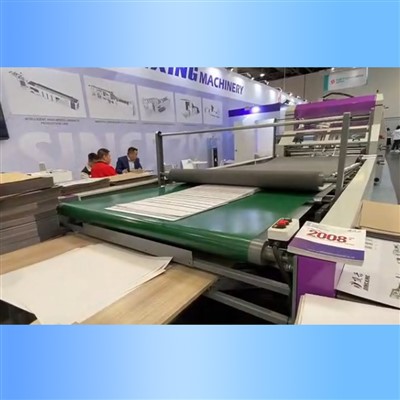
I wish I could pull a number out of thin air and call it a day, but that’d be lying. Every single machine we build is tailored to what a customer actually needs, not just some generic price tag. Let’s break this down like we’re grabbing coffee after a long day at the warehouse — no fancy jargon, just straight talk that’s actually useful.
First, let’s get one thing out of the way: “high speed” means different things to different people. For a tiny shop cranking out 10,000 boxes a week, a machine that runs 10,000 sheets an hour feels fast. For a plant pumping out 100,000+ sheets a day, you need something that can hit 18,000 to 25,000 sheets an hour without jamming or misaligning flutes the whole time. That speed number is the first big driver of price, and it’s one where cutting corners can cost you way more in the long run.
Let’s start with the base models, the ones we see most from small to mid-sized teams. These are the entry-level high speed flute laminators built for shops that are growing but not yet running 24/7 shifts. Think of these as your reliable workhorses — they handle flute sizes from E to B (the most common for retail boxes, shipping cartons, that stuff), run at 10,000 to 12,000 sheets per hour, and come with the basics you need to get rolling: automatic sheet feeding, a simple alignment system, and a standard glue applicator that doesn’t leak or clog mid-run.
Right now, these base models land between $25,000 and $45,000. Wait, why the gap? It’s not just the name on the machine. Some customers opt for a smaller footprint that fits in a tight back room, while others need a slightly larger capacity for occasional rush jobs. One of our regulars, a print shop in Columbus, went for the $28,000 base model two years ago — they do custom food packaging, so they needed the E-flute capability for small pastry boxes, and it’s never let them down. Last month, a customer in Dallas went for the $42,000 base model because they already had a few big contracts and wanted room to grow, no need to replace the machine in a year.
Now, if you’re past the “getting by” stage, if you’re running two or three shifts a day, churning out consistent orders for grocery chains or e-commerce brands, you’ll be looking at our mid-tier high speed laminators. These jump up in speed to 14,000 to 18,000 sheets per hour, come with precision alignment tech that cuts down on misaligned flutes (and wasted boards), and let you handle flute sizes all the way down to micro-flute for ultra-small luxury boxes.
What’s the price here? $55,000 to $85,000. The difference in that range comes down to add-ons that make your job easier. For example, a lot of customers add a automatic stacker that sorts finished boards by size — no more paying a guy $15 an hour to stand there stacking all day. One of our clients in Atlanta added that and a glue recovery system that cuts glue waste by 30% — they saved enough on glue in six months to cover the cost of the add-ons. Another mid-tier customer, a packaging firm in Chicago, skipped the fancy touchscreen control panel (they were fine with a user-friendly but simpler interface) and saved $10,000 off their total. That’s the thing: we don’t force add-ons on anyone. You pick what you actually use.
Then there’s the big league. If you’re running three 8-hour shifts, doing 25,000+ sheets an hour, handling custom flute sizes, variable thicknesses, and maybe even adding printing or coating on the fly — that’s our premium high speed flute laminators. These aren’t just machines; they’re production lines built for high-volume, ultra-precise work. We’re talking servo-driven everything, real-time quality checks that spot a misaligned flute before it becomes a waste pile, and integrations with your existing software so you don’t have to type order numbers in by hand all day.
These premium machines start at $100,000 and can go up to $200,000 depending on how custom you get. A big box brand out of Los Angeles went all in last year: they added a corona treatment system for their food-grade packaging, a remote diagnostics tool that lets us fix small issues before they shut down their line, and a modular design that lets them upgrade features in five years without buying a whole new machine. Their total was around $180,000, but they told us it paid for itself in 10 months by cutting downtime on rush orders.
Now, let’s talk about the stuff no one tells you when you’re just looking at a price tag — the hidden costs that make a $25,000 machine actually cost more than a $60,000 one in a year. First, downtime. A cheap machine that jams every two hours, that misaligns 10% of its sheets, that needs a new part every three months? That costs you money. A $30,000 machine that runs 98% of the time with almost no errors is way cheaper than a $20,000 one that’s down 20% of the shift.
Then there’s service. How easy is it to get a part when something breaks? Can a local tech fix it, or do you have to wait three days for someone from the other side of the country to fly in? As a supplier, we offer 24/7 remote support, and most areas have local techs who know our machines inside out. That’s not a free add-on — that’s part of the machine’s value, and it’s why our machines hold their resale value way better than the cheap imports you might find online.
Also, don’t forget installation and training. A lot of new buyers think, “I can hire a guy to put it together,” but high speed laminators are precision equipment. If it’s not leveled right, if the glue applicator isn’t calibrated, you’ll have nothing but problems. We include full installation and on-site training for all our machines, no extra fee. The cheap machine from that random online seller? You’ll pay a few grand to have someone set it up, and you’ll spend weeks figuring out how to use it instead of running orders.
Wait, what about used machines? I get it, cash flow is tight when you’re starting out. We sell fully inspected, certified used high speed flute laminators too, and their prices range from $12,000 to $30,000. But here’s the catch: you have to know what you’re getting. We only sell used machines that are less than 5 years old, that we’ve refurbished with new belts, sensors, and glue systems, and that come with a 6-month warranty. A lot of guys selling “used” machines on eBay or Facebook Marketplace? They’re machines that were retired because they break all the time, no warranty, no service support. We had a customer in Phoenix buy a $10,000 used machine from a random seller last year — it broke after two weeks, they couldn’t find parts, and they ended up buying a new base model from us. Total cost way more than if they’d just gone with a certified used one from us in the first place.
Let’s also touch on financing, because that’s a huge part of the actual cost. No one is paying for a $50k machine out of pocket, right? We work with a few lenders that specialize in packaging equipment, and we can get you a loan with 0% down for up to 3 years, or low monthly payments that make sense for your cash flow. A common misconception is that “financing makes it more expensive,” but when you factor in the downtime you avoid, the orders you can take that you couldn’t before, it’s usually a wash — and it lets you grow your business without draining your bank account on day one.
I’ve had customers come to me looking for the cheapest machine possible, and within a year they’re back, ready to upgrade because the cheap one couldn’t handle their new orders. Last year, a startup in Miami called me — they’d bought a super low-priced laminator for $18,000, but it only ran at 8,000 sheets an hour, so they had to turn down a big contract that would’ve doubled their revenue. They ended up going with a mid-tier model from us, and six months later they added a second shift. That $18k cheap machine didn’t pay for itself; it cost them a chance to grow.
Now, what should you actually consider when you’re looking at numbers, not just staring at a price? First, your current and future workload. If you’re doing 10,000 sheets a week now, but you just signed a contract for 50,000 a month, don’t buy a base model that maxes out at 12,000 sheets an hour. You’ll outgrow it fast. Second, what kind of boards do you run? E-flute for retail is different than B-flute for shipping boxes, and if you do micro-flute, that requires a machine with higher precision. Third, how important is service and support? If you’re in a small town with no local techs, buying from a supplier that offers 24/7 support is non-negotiable.
I know this isn’t the “one number” answer you were hoping for, but it’s the honest answer. The cost of a high speed flute laminator isn’t just the sticker price — it’s how much it lets you grow, how much downtime it costs you, how easy it is to fix when something goes wrong. As someone who’s spent the last decade working with these machines, I can tell you this: the best price isn’t the cheapest one. It’s the machine that fits your needs today, and that can grow with you tomorrow, with support you can count on when you need it.

If you’re in the market, and you want to stop guessing and get a real, tailored quote — tell me what you’re running, your weekly volume, the types of flute sizes you work with, and any goals you have for the next two years. No pressure, no sales pitch, just straight talk about what would work for your team. Let’s connect so we can figure out what machine makes sense for you, not just the one that has the lowest number on the price tag.
Energy Saving Air Conditioning References
- Corrugated Packaging Association. (2022). 2023 U.S. Corrugated Industry Equipment Cost & Capacity Report.
- International Fabrics Association International. (2021). High-Speed Converting Equipment Benchmarking Study.
- Packaging Digest. (2023). Mid-Range vs. Premium Converting Machinery: Total Cost of Ownership Analysis.
- Flexographic Technical Association. (2022). Corrugated Laminator Precision & Productivity Guidelines.
- Equipment Dealers Association. (2023). Certified Pre-Owned Industrial Machinery Warranty & Value Report.
Sheng Ding Group Limited
We’re well-known as one of the leading high speed flute laminator machine manufacturers and suppliers in China. With abundant experience, we warmly welcome you to buy advanced high speed flute laminator machine for sale here from our factory. For quotation, contact us now.
Address: FLAT E 16/F SUPERLUCK IND CTR 57 SHA TSUI RD PHASE 2 TSUEN WAN NT
E-mail: chm007@szchm.com
WebSite: https://www.packagmachine.com/
