If you’ve ever stepped into a machine shop, watched a lathe operator turn a rough piece of metal into a precise part for an aerospace component or a custom woodworking fixture, you’ve probably noticed the chuck holding that workpiece in place. I’ve been a lathe chuck supplier for 12 years, and I can’t tell you how often customers come to me asking about the different types of chucks—and why a diaphragm lathe chuck stands out from the three-jaw, four-jaw, or collet options we carry. Let’s cut through the jargon and talk about what a diaphragm lathe chuck actually does, the real-world uses that make it worth the investment, and why so many precision manufacturers swear by these underrated workholding tools. Lathe Chuck
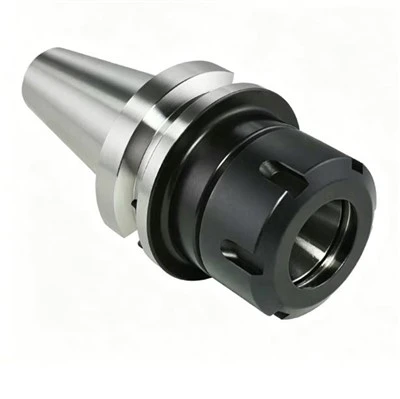
First, let’s get the basics right, because a lot of the confusion around diaphragm chucks comes from mixing them up with other workholding solutions. Unlike a standard three-jaw self-centering chuck that uses scroll teeth to grip a workpiece, a diaphragm chuck is made from a single, thin, flexible metal disc (usually high-grade steel or chrome alloy) that’s machined with precision slots. When you actuate the chuck (whether via a hydraulic, pneumatic, or mechanical system), the disc flexes evenly to close or open the slots, pulling all the gripping points inward or outward at the exact same time. That single-piece design isn’t just a manufacturing detail—it’s the backbone of every use case we’re going to talk about today.
One of the most common ( and most critical) uses for diaphragm lathe chucks is high-precision turning of thin-walled workpieces. Let’s be honest: thin-walled parts are a nightmare for any machinist. If you grip a thin aluminum tube or a brass ring with a standard three-jaw chuck, the pointed jaws will dent, deform, or bend the material before you even finish the first cut. We had a customer come to me last year who was making small fuel lines for recreational vehicles—each line was only 0.8mm thick, with a 12mm outer diameter, and a 0.02mm tolerance on the inner wall. They’d been using a three-jaw chuck and throwing away 3 out of every 10 parts because of deformation. Once they switched to a diaphragm chuck? They were throwing away less than 1 in 100. How does that work? Because the entire surface of the diaphragm contacts the workpiece evenly, not just three tiny point contacts. There’s no concentrated pressure to warp the thin wall, so the part stays round and true through the entire turning, boring, and facing process. That’s not a gimmick—that’s real money saved on scrap and rework.
Another big use case is high-volume, repetitive production for automotive and consumer electronics parts. If you’re running a 24/7 production line making piston pins, camera lens barrels, or small motor shafts, cycle time and consistency are everything. A standard chuck takes time to jaw adjustment, and even a well-maintained three-jaw will have slight wear on the scroll teeth, leading to part runout after thousands of cycles. Diaphragm chucks, though, are designed for rapid actuation and consistent gripping. Because there’s no individual jaw to adjust, operators can load and unload parts in seconds, and each grip is identical to the last. We supply a company that makes small connectors for smartphones—they produce 150,000 of these a month, each requiring a 0.01mm concentricity between the outer shell and the internal screw thread. When they switched to diaphragm chucks, their setup time per batch dropped by 40%, and part rejection due to concentricity errors fell by 65%. For high-volume producers, that kind of consistency translates directly to lower labor costs and higher output without sacrificing quality.
Don’t sleep on the use of diaphragm chucks for delicate or eccentric workpieces either. I’ve worked with woodturners who make custom fine furniture and artisanal bowls, and they’re starting to adopt diaphragm chucks for turning thin wooden bowls or small intricately shaped blanks. Wood is a natural, organic material that can warp slightly as it’s cut, and a three-jaw chuck often leaves uneven pressure marks on soft wood that ruin the finish. The even grip of a diaphragm chuck holds the blank securely without leaving deep marks, and because it can grip larger diameter blanks with more surface area contact, it’s perfect for turning small, delicate wooden pieces that would slip or shift in a regular chuck. We also supply medical device manufacturers who use diaphragm chucks to turn small bone screws and surgical instruments—parts that can’t have any surface damage or runout that would make them unsafe for use in the human body. The single-piece design of the diaphragm also means there are no loose jaws or moving parts that can trap debris in medical-grade machining environments, which is a huge compliance win for companies working with FDA-regulated products.
Wait, another use that a lot of people don’t mention: diaphragm chucks for reverse-grip or external gripping operations. A lot of chucks are only designed to grip the inside of a part or the outside, but diaphragm chucks can be machined to grip external surfaces just as evenly as internal ones. We had a customer making gear sprockets for industrial machinery—they needed to turn the outer teeth of the sprocket and then the inner bore, switching between gripping the outer edge and the inner hole multiple times per part. Using a three-jaw chuck meant they had to rework the jaws every time they switched, which added hours of setup per batch. With a diaphragm chuck, they just actuate it to expand outward to grip the inner bore, or contract inward to grip the outer edge, no jaw changes needed. That flexibility is a game-changer for parts that require multiple machining operations on different surfaces.
Now, let’s talk about what makes diaphragm chucks different from other workholding tools, because that’s where the real value lies. Collet chucks, for example, are great for small, round parts, but they only work for specific diameter ranges, and they wear out faster because the collet is moved by external forces. Diaphragm chucks can be customized for almost any diameter, and their single-piece design means they have far less wear over time—we’ve had customers using the same diaphragm chuck for 8 years with only minor maintenance, compared to three-jaw chucks that need jaw replacement every 12 to 18 months. And while they do have a higher upfront cost than a basic three-jaw chuck, the return on investment comes fast when you factor in lower scrap, less setup time, longer tool life, and higher quality parts that can command higher prices in the market.
I get it, if you’re a small machine shop just getting started, a diaphragm chuck might seem like a luxury you can’t afford. But let’s be real: if you’re quoting jobs that require tight tolerances and thin-walled parts, a cheap chuck will end up costing you more in rejected parts than investing in a quality diaphragm chuck from a reputable supplier like myself. We work with shops of all sizes, from 2-person home operations to large aerospace manufacturers, and we can size a diaphragm chuck to fit your lathe, no matter what industry you’re in. We also offer custom machining for the slots and gripping surfaces, so you don’t have to adjust the chuck or the jaws—they come ready to work straight out of the box.
Let’s circle back to the customer I mentioned earlier who was making thin-walled fuel lines. They initially tried to justify buying a diaphragm chuck by calculating the cost of the chuck against the scrap parts they were throwing away each month. After their first month using the chuck, they emailed me and said the chuck paid for itself in scrap savings alone, plus they were able to take on three new jobs that required thin-walled parts they’d previously turned down because they couldn’t hold the tolerance. That’s the real story behind diaphragm lathe chucks—they don’t just hold parts, they help you grow your business by expanding the types of jobs you can take on, while improving the quality of the parts you already produce.
Now, if you’re a machinist or a production manager reading this and you’re dealing with parts that are deforming, have concentricity issues, or take too long to set up, you owe it to yourself to learn more about how a diaphragm lathe chuck can solve those problems. I’ve been in this industry long enough to know that workholding is often an afterthought when buying new lathes or planning a production line, but it’s one of the most important factors that determines your output and quality. If you’re tired of throwing away good parts, missing tolerance requirements, or dealing with long setup times, reach out to us to discuss your specific needs. We don’t sell one-size-fits-all chucks—we work with you to figure out the right size, actuation type, and customization to fit your applications, no matter what industry you’re in.
Don’t let the complexity of precision machining intimidate you, and don’t settle for workholding that holds your business back. Diaphragm lathe chucks aren’t just another tool in the machine shop—they’re a solution to some of the most common, costly problems we face as machinists and manufacturers. If you’re ready to see how a quality diaphragm chuck can improve your production, give us a call to chat through your requirements.
Tool Holder References
- Machining Data Handbook, 4th Edition, Society of Manufacturing Engineers, 2021.
- Workholding Technology for Precision Turning, Journal of Machine Tool Engineering, Vol. 18, No. 3, 2022.
- Diaphragm Chuck Design and Application Guidelines, Lathe Workholding Association Technical Bulletin, 2020.
- Thin-Walled Part Machining: Workholding Solutions, International Journal of Production Research, Vol. 59, No. 12, 2021.
Shun Wei Precision Technology Co., Ltd.
With abundant experience, we are one of the most reliable lathe chuck manufacturers and suppliers in China. We warmly welcome you to buy durable lathe chuck at competitive price from our factory. If you have any enquiry about cooperation, please feel free to email us.
Address: Room901, Building2, Yijing Apartment, Northeast side of the intersection of Central Avenue and East Fifth Road, Tianjin Free Trade Zone (Airport Economic Zone)
E-mail: sale@sw-csd.com
WebSite: https://www.tjswprecisiontool.com/
