If you’ve ever stood next to an industrial oven mid-cycle—even one operating at a searing 1,200°F (649°C)—you’ve probably noticed how little the exterior wall temperature rises. That’s insulation doing its job, and it’s not just about keeping workers safe. As someone who’s spent 12 years selling, troubleshooting, and refining industrial ovens for manufacturing facilities across 17 countries, I can tell you: insulation is the unsung backbone of oven performance, and cutting corners here will cost you far more in the long run than investing in high-quality materials up front. Let’s break down how insulation impacts every part of your oven’s function, reliability, and bottom line, based on what I’ve seen working directly with line managers, maintenance teams, and process engineers daily. Industrial Oven
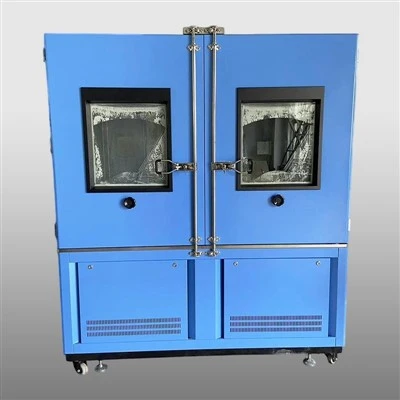
First, let’s get one thing straight: industrial ovens aren’t one-size-fits-all, and neither is their insulation. When a plant reaches out to me asking for a replacement oven or a retrofit for an existing unit, the first question I ask is what process it’s used for—curing powder coating, baking ceramic parts, annealing metal, or drying food ingredients—because that dictates insulation needs. For example, a conveyor oven running at 350°F to cure paint on automotive parts needs a different insulation than a batch oven holding 2,000°F for heat treating tool steel. The wrong insulation doesn’t just fail to keep heat in; it distorts the entire process, which can ruin thousands of dollars worth of product in a single batch.
Let’s start with energy efficiency, the most talked-about (and often most misunderstood) benefit of good insulation. I recently worked with a job shop in the Midwest that had a 10-year-old batch oven they thought was working fine. When we ran a thermal scan on the walls, we found the exterior surface temperature hit 180°F in areas, which meant they were losing roughly 40% of the heat generated—just through the walls. That oven runs 16 hours a day, 6 days a week, at an average temperature of 400°F. By switching to a ceramic fiber insulation with a lower thermal conductivity, we brought exterior wall temps down to a consistent 95°F, and their natural gas bill dropped by 32% that first quarter. The numbers don’t lie: thermal conductivity (the rate at which a material transfers heat) is the key here. Materials with low k-values (that’s the industry term for thermal conductivity) don’t let heat escape to the outside, so the oven’s heating elements don’t have to work overtime to maintain the set temperature. It’s simple physics, but many plants overlook it because they only look at the upfront cost of insulation, not the annual operating cost. For the Midwest shop, their $12,000 retrofit cost paid for itself in 8 months.
Next up: temperature uniformity, which is non-negotiable for process quality. I once got a panicked call from a aerospace parts manufacturer who was getting rejected 15% of their titanium blanks after annealing them in a new oven. The problem? The oven’s insulation was installed incorrectly: the installers used lightweight fiberglass instead of the dense alumina silicate fiber it was rated for, and there were gaps between the insulation panels. Heat escaped through those gaps, creating cool spots in the center of the oven and overheated areas near the door and corners. When we re-insulated the oven with properly fitted, high-density panels and sealed all joints with high-temperature gasketing, temperature uniformity improved from ±22°F to ±3°F across the entire chamber. Suddenly, their reject rate dropped to 1%, and they didn’t have to rework dozens of parts every week. Temperature uniformity is what separates a good part from a bad one, and insulation is the main driver of that. Even small gaps, poorly matched materials, or insulation that’s compressed over time (which happens if it’s not anchored properly) can create hot or cold spots that throw off your entire process. For processes like powder coating, even a 5°F difference in curing temp can cause the finish to bubble or peel, leading to scrap and rework costs.
Then there’s oven lifespan and maintenance frequency, two areas where insulation directly impacts uptime. Think about it: if an oven’s exterior wall is too hot, that heat doesn’t just escape—it damages the oven’s structural components over time. Steel walls, wiring, and control panels exposed to prolonged high temperatures can warp, corrode, or fail prematurely. I’ve seen ovens that were only 5 years old have to replace their control panels because the heat seeped into the control compartment, frying the circuit boards. A properly insulated oven keeps the exterior at a safe, manageable temperature—usually under 120°F for standard ovens, even at 500°F internal temp—so all the internal components, wiring, and structural steel stay at a consistent, lower temperature. That means less wear and tear, fewer breakdowns, and a longer overall oven lifespan. I also always recommend insulation that’s resistant to vibration and moisture, especially for ovens used in heavy manufacturing or food processing. Moisture can cause insulation to break down, lose its thermal properties, and even grow mold, which is a food safety hazard for bakeries or snack manufacturers. Vibration from conveyor systems or heavy machinery nearby can cause insulation to shift or compact, creating gaps over time. That’s why I work with my insulation partners to tailor materials to each customer’s environment, not just their temperature requirements.
Wait, but what about insulation for different oven types? That’s a question I get all the time, so let’s break it down by the most common units we supply. Batch ovens, which are used for small, high-value parts, need insulation that can withstand consistent, high temperatures and handle frequent door openings—every time you open a batch oven door, you lose a burst of heat, so the insulation has to recover quickly. Conveyor ovens, which run 24/7 for continuous processing, need insulation that’s uniform along the entire length of the chamber to maintain temperature across the entire conveyor line, no hot spots at the start or end. Walk-in ovens, used for large parts or heavy loads, need insulation that’s thick enough to keep exterior temps safe, but also durable enough to handle forklift traffic and heavy use. For example, a walk-in oven we built for a wind turbine blade manufacturer uses 8 inches of rigid ceramic fiber insulation lined with a steel skin that’s impact-resistant, so it can handle the occasional bump from a forklift without damaging the insulation.
I also want to address a common mistake I see plants make when retrofitting old ovens: using the wrong thickness of insulation. A lot of people think “more is better,” but that’s not always true. Insulation thickness is calculated based on the oven’s maximum operating temperature, the desired exterior wall temperature, and the material’s thermal conductivity. If you add too much insulation, you might end up with an oven that’s harder to open, has too little space for parts, or has issues with heat buildup in the oven’s interior (wait, that’s a real thing—if insulation is too thick, it can trap heat too much, especially when parts are loaded into the oven). The right thickness is a balance between energy savings, process needs, and space constraints. When I work with a customer, we always run a thermal analysis to calculate the exact thickness and material they need, not just guess based on what was in their old oven.
Now, let’s talk about real-world results to back this up. Last year, a heat treating facility in Texas reached out to us because their 2000°F pit oven was running so inefficiently that their monthly propane bills were $18,000. They were also having issues with distortion in their steel gears during tempering, because of temperature swings. We replaced the old, compressed fiberglass insulation with high-purity polycrystalline alumina fiber insulation, which has a thermal conductivity 25% lower than their old material. We also resealed all the joints and replaced the worn door gasket. The first month after the retrofit, their propane bill dropped to $11,200—that’s a $6,800 monthly savings. Their temperature uniformity improved to ±4°F, and gear distortion dropped by 18%. That’s not just a small improvement; that’s thousands of dollars in savings every year, plus better product quality.
So what should you look for when evaluating your oven’s insulation? First, ask for a thermal scan of your current oven—most reputable oven suppliers will offer this as part of a maintenance assessment. That will show you exactly how much heat you’re losing, where the gaps are, and if your insulation is degraded. If you’re in the market for a new oven, don’t just compare prices between models—ask what insulation materials they use, their thermal conductivity ratings, and the projected energy savings. A cheaper oven with subpar insulation will end up costing you far more over its lifespan than a slightly more expensive unit with high-quality insulation.
If you’re noticing higher energy bills, more product scrap, or more frequent breakdowns in your industrial oven, the problem might not be the heating elements or the control system—it might be the insulation. I’ve been in this industry long enough to know that the best ovens are the ones where every component works together, and insulation is the foundation. Cutting corners here is a short-term fix that leads to long-term costs, but investing in the right insulation for your specific process will pay off in energy savings, better product quality, less downtime, and a longer oven lifespan.

If you’re ready to assess your current oven’s insulation or look for a new unit tailored to your process, reach out to us to discuss your needs. We work with plants of all sizes, from small job shops to large manufacturing facilities, to find the right insulation and oven solution that fits your budget and performance goals. Don’t let bad insulation eat into your profits or ruin your parts—let’s work together to make your oven work for you.
Ozone Test Chamber References
- American Society of Heating, Refrigerating and Air-Conditioning Engineers (ASHRAE). 2022. ASHRAE Handbook: HVAC Applications. Chapter 30: Industrial Process Heating.
- National Fire Protection Association (NFPA). 2021. NFPA 86: Standard for Ovens and Furnaces.
- Industrial Thermal Insulation Manufacturers Association (ITIMA). 2023. Guide to Insulation Selection for High-Temperature Industrial Equipment.
- Taylor, R. 2022. Energy Efficiency in Industrial Ovens: A Case Study of Process and Performance Impacts. Journal of Industrial Manufacturing, Vol. 45, No. 2.
ALP Technology (T&M) Ltd.
With abundant experience, we are one of the most reliable industrial oven manufacturers and suppliers in China. Please feel free to buy advanced industrial oven for sale here from our factory. All customized products are with high quality and competitive price.
Address: No.19, Mingde Road, Xi’an, China
E-mail: info@alp-environment.com
WebSite: https://www.alp-environment.com/
