What are the vibration characteristics of a cryogenic ball valve during operation?
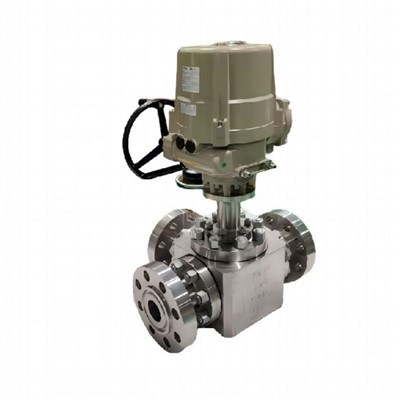
As a supplier of cryogenic ball valves, I’ve witnessed firsthand the critical role these valves play in various industries, from liquefied natural gas (LNG) processing to medical cryogenics. One aspect that often goes unnoticed but is of utmost importance is the vibration characteristics of cryogenic ball valves during operation. Understanding these characteristics is not only essential for ensuring the smooth and efficient functioning of the valve but also for the overall safety and reliability of the system in which it is installed. Cryogenic Ball Valve
1. Basics of Cryogenic Ball Valves
Before delving into the vibration characteristics, it’s important to understand what cryogenic ball valves are. These valves are designed to operate in extremely low – temperature environments, typically below -100°C. They consist of a spherical disc (the ball) with a hole through it. When the ball is rotated, the hole aligns with the flow path, allowing fluid to pass through, or it blocks the flow path when turned perpendicular to it.
The materials used in cryogenic ball valves are carefully selected to withstand the harsh cryogenic conditions. For example, the valve body is often made of stainless steel, which has good mechanical properties at low temperatures. The seals are made of materials like polytetrafluoroethylene (PTFE) or other cryogenic – compatible elastomers that can maintain their sealing integrity in cold environments.
2. Sources of Vibration in Cryogenic Ball Valves
There are several sources of vibration in cryogenic ball valves during operation.
2.1 Fluid Flow
The most common source of vibration is the fluid flow through the valve. When the fluid passes through the valve, it creates pressure fluctuations. These fluctuations can cause the valve components, such as the ball and the stem, to vibrate. The magnitude of the vibration depends on factors such as the flow rate, the fluid density, and the valve’s internal geometry. For instance, a high – flow rate can lead to more significant pressure fluctuations and, consequently, stronger vibrations.
2.2 Cavitation
Cavitation is another significant source of vibration. When the pressure of the fluid drops below its vapor pressure, vapor bubbles form. These bubbles then collapse as the pressure increases again. The collapse of these bubbles generates shock waves that can cause the valve to vibrate. Cavitation is more likely to occur when the valve is operating at a high differential pressure or when the fluid has a low vapor pressure.
2.3 Mechanical Resonance
Mechanical resonance can also cause excessive vibration in cryogenic ball valves. Every valve has a natural frequency at which it tends to vibrate. If the frequency of the external forces acting on the valve, such as those from the fluid flow or the operation of the actuator, matches the natural frequency of the valve, resonance occurs. Resonance can amplify the vibration amplitude, potentially leading to damage to the valve components.
3. Effects of Vibration on Cryogenic Ball Valves
The vibration of cryogenic ball valves during operation can have several negative effects.
3.1 Seal Damage
Vibration can cause the seals of the valve to wear out prematurely. The constant movement and impact can damage the sealing surfaces, leading to leaks. In a cryogenic system, even a small leak can be extremely dangerous, as cryogenic fluids are often flammable or can cause severe frostbite.
3.2 Component Fatigue
Excessive vibration can also lead to fatigue of the valve components. The repeated stress caused by the vibration can cause cracks to form in the valve body, the ball, or the stem. Over time, these cracks can grow and eventually lead to the failure of the valve.
3.3 Noise Generation
Vibration in cryogenic ball valves can generate noise. This noise can be a nuisance in the workplace and can also indicate potential problems with the valve. High – frequency noise, in particular, can be a sign of cavitation or mechanical resonance.
4. Measuring and Analyzing Vibration Characteristics
To understand the vibration characteristics of cryogenic ball valves, it’s necessary to measure and analyze the vibration.
4.1 Vibration Sensors
Vibration sensors, such as accelerometers, can be used to measure the vibration of the valve. These sensors are typically attached to the valve body or other critical components. They can measure the amplitude, frequency, and direction of the vibration.
4.2 Data Analysis
Once the vibration data is collected, it can be analyzed using various techniques. For example, frequency analysis can be used to identify the dominant frequencies of the vibration. This can help determine if resonance is occurring. Time – domain analysis can be used to study the amplitude and duration of the vibration over time.
5. Mitigating Vibration in Cryogenic Ball Valves
As a cryogenic ball valve supplier, we are committed to providing solutions to mitigate the vibration in our valves.
5.1 Design Optimization
We optimize the design of our cryogenic ball valves to reduce the sources of vibration. For example, we use smooth internal geometries to minimize pressure fluctuations caused by fluid flow. We also select materials and components that are less prone to vibration.
5.2 Anti – Vibration Devices
We can also install anti – vibration devices on our valves. These devices, such as dampers or vibration isolators, can absorb or dissipate the vibration energy, reducing the amplitude of the vibration.
5.3 Proper Installation and Maintenance
Proper installation and maintenance of the cryogenic ball valve are also crucial for reducing vibration. During installation, the valve should be properly aligned and supported to minimize the transfer of vibration to the surrounding components. Regular maintenance, including checking the seals and tightening the bolts, can also help prevent excessive vibration.
6. Conclusion and Call to Action
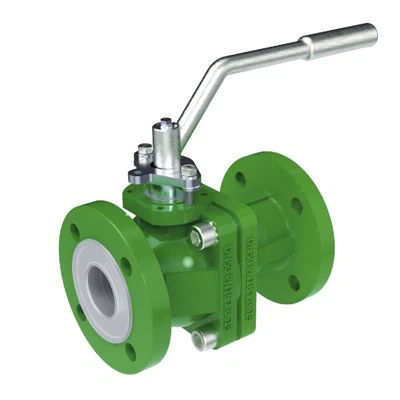
In conclusion, understanding the vibration characteristics of cryogenic ball valves during operation is essential for ensuring their reliable and safe performance. As a cryogenic ball valve supplier, we have the expertise and experience to provide high – quality valves with minimized vibration.
Check Valve If you are in need of cryogenic ball valves for your project, we invite you to contact us for a detailed discussion. Our team of experts can help you select the right valve for your specific requirements and provide you with solutions to address any vibration – related concerns. We are committed to providing the best products and services to meet your needs.
References
- "Cryogenic Valves: Design, Selection, and Application" by John W. Swearingen
- "Fluid Mechanics and Hydraulic Machines" by R. K. Bansal
- "Mechanical Vibration: Theory and Application" by Singiresu S. Rao
Wuxi PYNOS Flow-tech Co., Ltd.
As one of the leading cryogenic ball valve manufacturers and suppliers in China, we offer a wide range of products with superior quality. We warmly welcome you to buy high quality cryogenic ball valve made in China here from our factory. We also accept customized orders.
Address: Sales Center: 7th Floor, No.19 Qingyuan RD, Wuxi City, Jiangsu Prov., China
E-mail: Info@pynosvalve.com
WebSite: https://www.pynosvalves.com/
