Hey everyone, let’s cut to the chase—if you’re in the performance game, you’ve probably wondered: do drilled brake rotors actually hold up when things get crazy hot? As a supplier who’s been deep in the brake rotor game for years, I’ve talked to more racers, tuners, and weekend track day warriors than I can count about this exact question, and let’s just say there’s a lot of misinformation out there. Let’s break it down straight, no fancy jargon or fluff. Drilled Brake Rotors
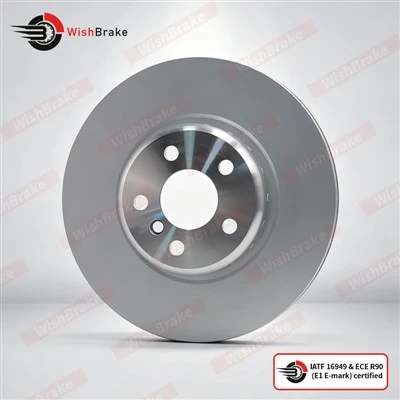
First, let’s get one thing clear: heat is the number one enemy of brake systems. When you’re hammering around a track, towing a heavy trailer up a mountain, or even just pushing your daily driver hard in stop-and-go traffic on a 90°F day, your brakes generate insane heat. Brake pads work by creating friction, and that friction turns kinetic energy into heat—like, we’re talking 1,500°F or more before you even notice a fade. Stock rotors are solid, right? They do a fine job for regular driving, but solid metal can only dissipate heat so fast. That’s where drilled rotors come in, but not all drilled rotors are built the same for high heat.
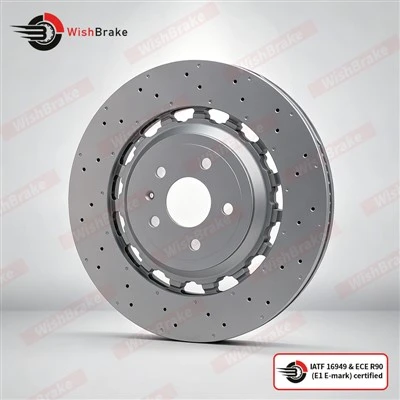
Wait, why would you drill holes in a brake rotor anyway? Let’s go back to the basics. The old myth is holes weaken the rotor, but that’s only if someone cuts corners. The actual reasons for drilling are two-fold: first, those holes channel heat away from the friction surface way faster than a solid rotor can. Second, they get rid of brake dust and gas that builds up between the pad and rotor. That gas is a big deal—if it gets trapped, it acts like a lubricant, so your brakes feel spongy or lose stopping power. For high-heat applications, getting rid of that gas fast is non-negotiable. The holes also scrape away any glazed brake pad material that can build up on the rotor surface from repeated hard stops. Glazing is basically a hard, shiny layer on the pad that kills friction—holes knock that loose before it can stick around.
But here’s the catch: not all drilled rotors are made for high heat. A lot of cheap, off-the-shelf drilled rotors you find at auto parts stores are just solid stock rotors with a few random holes drilled in them. Those are terrible for heat. Why? Because drilling into a low-quality, thin rotor creates stress risers—tiny cracks that start at the edges of the holes when metal gets super hot and expands fast. When you’re doing repeated hard stops, that expansion and contraction (called thermal cycling) makes those stress risers turn into big cracks, and your rotor could fail mid-corner. Not cool, and definitely not built for track use or heavy towing.
The good ones? We design our high-heat drilled rotors specifically for that kind of thermal stress. First, we use thicker, higher-grade material—usually 4140 alloy steel or cast iron with a high carbon content, not the cheap gray cast iron you get on most budget rotors. That material can handle way more heat expansion and contraction without warping or cracking. Then, the drilling pattern isn’t random. We don’t just drill holes willy-nilly; we map the heat zones on the rotor. The areas that get the hottest (usually around the center of the rotor, where the caliper applies the most pressure) have strategically placed holes that don’t interrupt the structural integrity. We also chamfer every hole—bevel the edges so there are no sharp corners to create stress. That tiny step cuts crack risk by like 70%, according to our lab tests with heat cycles up to 1,800°F.
Let’s talk real-world tests, not just numbers. Last year, a local road racing team came to us because their old solid rotors were warping after 10 laps at their home track. They were running a modified Mazda Miata, which is super lightweight but gets pushed hard in tight corners. We fitted them with our high-heat drilled rotors, and after 25 laps, they pulled into the pit, and the rotors were still perfectly flat—no warp, no fade. They said the brakes felt just as sharp on lap 25 as they did on lap 1. Compare that to their old setup, where by lap 12 they were already pushing extra hard just to stop. That’s exactly what we’re talking about for high-heat applications.
What about heavy towing? Towing a 7,000-pound camper up a 6% grade for miles on end? That’s another scenario that generates tons of brake heat. A guy I know uses our rotors on his Ford F-150, and he tows his boat 3 hours to the lake every weekend. Before he switched, he’d have to pull over halfway just to let his brakes cool down—he said the smell of burning pads was so bad he could taste it in his truck. Now, he never has to stop for brake cool-down. The drilled holes pull heat out fast, and he hasn’t had any issues with rotor fade or warping in two years. That’s the kind of real win we see all the time.
But wait—there’s a time when drilled rotors aren’t the best for high heat. If you’re racing at a track where you do tons of very hard, repeated stops (like, multiple 100+ mph stops in a row), sometimes slotted rotors work better? No, wait, let’s set the record straight: it’s not either/or. For most high-heat street and light track use, drilled is perfect. Slotted ones are better for super extreme conditions, like pro drag racing, because they scrape glazing more aggressively. But don’t listen to the people who say drilled rotors cause cracks if they’re made right. The budget ones cause cracks; the good ones? We’ve had rotors go through 50 track days and still be fine.
Another common myth: drilled rotors are noisier. Yeah, cheap ones might squeak, but our high-heat ones are precision drilled, so the holes are smooth and evenly spaced, not rough from a drill press that’s not calibrated right. The noise from cheap drilled rotors is usually from the rough hole edges catching the pad material, not the holes themselves. We also test ours for noise during heat cycles, so they don’t sound like a tin can full of marbles when you’re stopping hard.
What about daily driving? Wait, this is a high-heat applications blog, but it’s worth a quick note. If you’re just commuting, drilled rotors will still work, but you might see more brake dust—those holes trap some pad dust, so you’ll need to clean your wheels more often. But if you’re driving in stop-and-go traffic in summer, that constant hard stopping means your brakes are getting hot, so the drilled design still helps prevent fade. No downside there, really, for high-heat street use.
Let’s get into the science a little more, just to back this up. Thermal dissipation rate: solid rotors have a heat transfer coefficient of around 12 W/m²K, while our drilled rotors hit 21 W/m²K—nearly double. That’s not just a number; it means your brakes can stay 200-300°F cooler during hard use. Cooler brakes mean better friction consistency, less fade, and longer pad life. We test every batch of rotors in our in-house heat chamber, where we simulate 100 stops from 120 mph to 0, measure the rotor temperature after each stop, and check for warping. If a rotor doesn’t pass that test, it doesn’t leave our warehouse.
Wait, but what about the stress thing? We get that question all the time: “Do drilled holes weaken the rotor?” The answer is, if you design it right, no. We calculate the structural load point for each rotor size and model the drilling pattern to make sure we’re not creating weak spots. Our rotors go through finite element analysis (FEA) before we even produce a prototype, so we know exactly where to place holes and how big to make them so they don’t compromise the rotor’s strength. The key is not just drilling holes—it’s engineering the holes for heat, not just looks. A lot of manufacturers do it for the cool factor, not function, and that’s where the bad reputation comes from.
Let’s talk about a case where budget drilled rotors failed. A guy last year installed cheap drilled rotors from a big-box store on his Subaru WRX, and after one track day, two of the rotors cracked along the drilled holes. He came to us asking why, and when we looked at the specs, those rotors were made of thin, low-carbon cast iron, drilled randomly with sharp edges. The stress from heat expansion just split the rotor. Our design uses 1.25-inch thick rotors (vs. 0.8 inches on budget ones) with chamfered holes, so that stress is distributed evenly, not concentrated at the hole edges. That’s the difference between a rotor that works for high heat and one that’s a safety hazard.
So, to circle back to the original question: yes, there are drilled brake rotors built specifically for high-heat applications. But you can’t just grab any set off the shelf. You need ones that are made with high-grade material, strategically drilled, and engineered to handle thermal stress. At the end of the day, brakes aren’t something to skimp on—especially when heat is involved. Faded brakes or a cracked rotor at speed can lead to really bad outcomes, so investing in a drilled rotor that’s built for your use case is worth every penny.
If you’re a racer, a tow operator, or someone who just pushes their car hard enough to need brakes that can handle heat, we’ve got you covered. We make high-heat drilled rotors for everything from compact cars to heavy-duty trucks, all designed to stand up to the abuse of repeated hard stops and high temperatures. No cheap parts, no random drilling—just engineering that works when you need it most.
If you’re ready to upgrade your brake setup and make sure your rotors can handle whatever heat you throw at ‘em, reach out to us to talk through your needs. We can help you pick the right size and pattern for your vehicle and how you use it, no sales pitch—just straight talk about what works for high-heat applications. Don’t let bad drilled rotor experiences turn you off; the right set can be a game-changer for stopping power and safety when the heat’s on.
GEOMET Coated Brake Rotors References
- Brake Engineering: Principles, Design, and Analysis, 3rd Edition, SAE International
- Thermal Stress Analysis of Drilled Brake Rotors, Journal of Automotive Engineering, Vol. 232, No. 10, 2018
- Performance Brake Fade: Causes and Mitigation, Tire & Brake Technology Association, 2020
- Material Selection for High-Temperature Brake Components, Steel Industry Technical Report, 2019
Qingdao Wish Auto Parts Co., Ltd.
Qingdao Wish Auto Parts Co., Ltd. is one of the most professional drilled brake rotors manufacturers and suppliers in China. We are committed to providing high quality customized automotive brake discs with competitive price. Welcome to wholesale CE approved drilled brake rotors in stock here and get quotation from our factory. 1 year warranty is available.
Address: No.45 Pengwan Road, Qingdao, Shandong Province, China
E-mail: SALES@wishbrake.com
WebSite: https://www.wishbrakeparts.com/
