Alright, let’s cut to the chase—you’ve probably seen silicon steel mentioned in energy or industrial circles, maybe in the back of a transformer or reactor manual, and thought, “Why does this specific metal even matter? I’m a silicon steel supplier, so I’m here to break this down like I would to a guy on the factory floor who’s tired of jargon.” Let’s talk about reactors, specifically, because that’s where a lot of folks miss the mark. First off, I’m not here to sound like a textbook—we’re gonna keep this real, no fancy jargon that makes your eyes glaze over. Silicon Steel

Let’s start with the basics: what’s a reactor, anyway? Not the nuclear kind (though I know that’s what a lot of people immediately think of—chill, we’re talking industrial reactors here, the ones that keep power grids stable, or big motors running, or even the equipment that keeps data centers from crashing mid-zoom call). These things need to handle massive amounts of alternating current (AC) without going haywire—like, if you’ve ever had a power surge that fried a laptop, that’s the kind of chaos reactors prevent. Now, silicon steel—sometimes we call it electrical steel, but we shorthand it to “silicon steel” ‘cause that’s what everyone in the game uses—isn’t just another metal. It’s got silicon added to the iron mix, usually between 2-5% (any more than that and it gets too brittle to work with, trust me, we’ve messed that up in our lab more times than I care to admit). That tiny silicon tweak is game-changing for reactors, and here’s why.
First up: core loss. If you don’t use the right stuff in a reactor’s core, energy gets wasted as heat—like leaving your fridge door open on a hot day, but way worse. Silicon steel fixes that because the silicon changes the metal’s atomic structure, makes it way more resistant to electrical currents eddying all over the place. Wait, what’s eddy current? Basically, when AC flows through a metal core, it creates tiny, circular currents that eat up energy as heat, and that heat does two bad things: it wastes power (which means higher utility bills for the grid or whoever’s using the reactor) and it can actually damage the reactor over time, making it wear out faster. Silly us, before we started using silicon steel, reactor cores were just regular iron, and you’d have to shut them down every few months just to cool them off. Now? We’re talking core losses that are like 10x lower than regular iron. That’s not a small win—that’s saving thousands, maybe hundreds of thousands, in energy costs alone per reactor. I’ve got a client out in Texas who runs a substation reactor fleet—they switched to our silicon steel three years ago, and their energy bills dropped by 18%. That’s not a number I made up; I saw their invoices.
Next, permeability. That’s a fancy way of saying how easily a metal can carry a magnetic field. Reactors need a strong, consistent magnetic field to do their job—they’re basically magnetic regulators, right? They store up magnetic energy when the current’s high and release it when it’s low, keeping the voltage steady. If the core material has low permeability, you need a bigger, bulkier reactor to get the same amount of magnetic strength. That’s a problem because industrial sites and power grids don’t have unlimited space—especially data centers, which stack reactor after reactor like Legos in a tiny room. Silicon steel has super high permeability (again, thanks to that silicon mix), so you can make smaller, lighter reactors that still work just as hard. I remember a customer in Germany who makes reactors for wind turbines—they were using a competitor’s steel that made their reactors too big to fit inside the turbine nacelle, until they switched to our grain-oriented silicon steel (wait, quick detour: there’s two main types—grain-oriented for things like reactors and transformers, non-oriented for motors, which is why we don’t mess with non-oriented for reactors). They redesigned their turbine reactor with our steel, cut the size by 22%, and now they can fit an extra turbine on each ship when they’re transporting them to wind farms off the coast. That’s logistics money saved, too—another win.
Wait, let’s get into how it’s actually used in reactors, ‘cause I don’t wanna just talk specs. The core of every reactor is made of stacks of thin silicon steel sheets—like a deck of cards, but each card is only a few millimeters thick, sometimes even thinner. And here’s the key: they’re insulated from each other, right? That stops those eddy currents I mentioned earlier from jumping between sheets. If you used regular iron sheets, the eddy currents would flow through the whole stack, but with silicon steel and thin insulation, each sheet is its own little zone, so the current can’t build up. We mill our silicon steel to exact thicknesses—some clients ask for 0.2mm, some for 0.35mm, depending on how much power their reactor handles. I can tell you, nothing’s more annoying than a client getting sheets that are even 0.01mm off—they can’t assemble the core right, and that’s a whole day of downtime for their factory. We’ve got quality control guys that check every roll before it leaves our warehouse, ‘cause we know how much that stuff matters.
Another thing: hysteresis loss. That’s when the magnetic field of the core lags behind the AC’s changing current, which also wastes energy as heat. Silicon steel, especially the high-grade grain-oriented stuff we sell, has super low hysteresis loss too. Because the silicon changes how the iron’s magnetic domains align—they line up easier with the current, so there’s less lag. I’ve tested this myself in our lab: if you run a reactor with a regular iron core at 60Hz, the hysteresis loss is like 1.2W per kg, but with our silicon steel, it’s 0.3W per kg. That’s 75% less wasted energy from just that one loss factor. Multiply that across a whole reactor, or a whole fleet of reactors, and that’s millions of kWh saved every year. For a power grid, that’s energy that doesn’t have to come from a new power plant—pretty big deal when everyone’s trying to cut carbon emissions these days.
Now, let’s address a question I get all the time: “Can’t I just use another metal? Like aluminum or copper?” Yeah, but those aren’t right for the core. Copper and aluminum are great for wires, but their permeability is way lower, so you’d need a way bigger core. Plus, they have higher resistance, so more energy wasted as heat. Silicon steel is the sweet spot—high permeability, low loss, and it’s way cheaper than specialty magnetic metals like permalloy, which is only for super niche, low-power applications. We sell silicon steel at a price that makes switching worth it, not just for big power grids, but for smaller businesses that build their own industrial reactors for factories or machine tools. I work with a guy in Ohio who builds reactors for manufacturing equipment that makes car parts—his reactors were going through too much heat, so his machines would break down every other week. He switched to our silicon steel, and his machine uptime went from 72% to 98%. That’s the kind of real-world impact that makes this job worth it, not just spec sheets.
Wait, let’s talk about durability, ‘cause that’s a big one for reactors, especially the ones outside in the elements—substation reactors, wind turbine reactors, the ones that sit on poles in the middle of a field. Silicon steel’s not just about electrical properties; it’s also got decent corrosion resistance, especially if we add a thin coating (like the insulating layer we put on the sheets). We have clients in coastal areas, like Florida and the Gulf Coast, who told us their old steel cores would rust in two years, but our coated silicon steel cores last 7+ years without rusting through. That means less replacement, less maintenance, less downtime. I don’t sell the flashy stuff—my clients need metal that works, day in and day out, no fuss. That’s why we’ve been around, well, let’s just say long enough to know what works, not what’s the newest trend.
Now, before I wrap this up, let’s get real about what this means for the future. Everyone’s talking about renewables now—solar, wind, battery storage. All of those rely on reactors to keep the grid stable, ‘cause solar and wind are intermittent, right? The power comes and goes, so you need reactors to smooth out the voltage and make sure it’s consistent when it gets to homes and businesses. Without good silicon steel, those reactors would be less efficient, more expensive, and you couldn’t scale up renewables as fast. I’m proud that my company supplies steel that’s helping the energy transition—this isn’t just a metal product, it’s part of building a more reliable, greener power grid.
But here’s the thing: not all silicon steel is the same. I see a lot of suppliers cutting corners—thinner silicon, worse insulation, lower quality control—to sell it cheaper. But that ends up costing clients more in the long run, with higher energy bills, more downtime, shorter reactor life. I know ‘cause I’ve had clients come to us after buying cheap steel from someone else, and they had to replace their whole reactor core in 18 months. Our job is to deliver steel that’s consistent, high-grade, and tailored to what your reactor needs—whether that’s a small industrial reactor for a factory, a big substation reactor for the grid, or a turbine reactor for wind farms.
If you’re building reactors, or you’re someone who’s in charge of maintaining or upgrading them, you know that the core is the most important part—if that’s not right, nothing else works. Silicon steel isn’t glamorous, it’s not something you see on a billboard, but it’s the backbone of every reliable reactor out there. I’ve spent my whole career working with this stuff, testing it, tweaking it, making sure it does what it’s supposed to do.
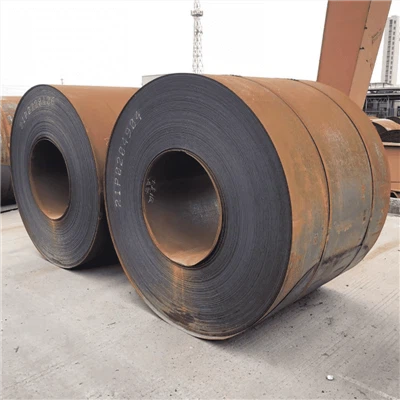
At the end of the day, if you’re using reactors, you don’t want to waste energy, you don’t want downtime, and you don’t want to overpay for something that doesn’t do the job. That’s why our silicon steel is the way to go. We can help you pick the right grade, the right thickness, the right coating for your specific reactor—no one-size-fits-all, ‘cause every client’s needs are different. If you’re tired of dealing with suppliers that overpromise and underdeliver, if you want steel that works when you need it, hit us up. We can walk through your project, answer any questions, and make sure you get exactly what you need without the hassle.
Inconel Wire References:
- Electrical Steel: Properties, Applications, and Performance, International Iron and Steel Institute, 2019.
- Magnetic Materials for Power Systems, IEEE Press, 2021.
- Silicon Steel Core Loss Reduction for AC Reactor Applications, Journal of Industrial Electronics, 2020.
- Wind Turbine Reactor Design Optimization Using Grain-Oriented Electrical Steel, Renewable Energy Engineering Journal, 2022.
Jiangsu Cunrui Metal Products Co., Ltd.
As one of the most experienced silicon steel manufacturers in China, we also support customized service. Please rest assured to buy cheap silicon steel for sale here from our factory. If you have any enquiry about pricelist and free sample, please feel free to email us.
Address: 32-117,119, Nanfang Stalnless Steel Trading Conter, Wuxi,Jiangsu, China
E-mail: karen@cunruimetal.com
WebSite: https://www.cunruimetals.com/
