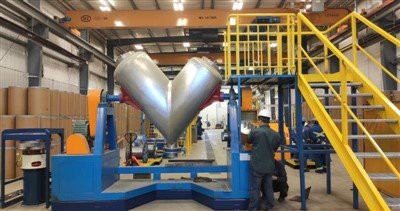
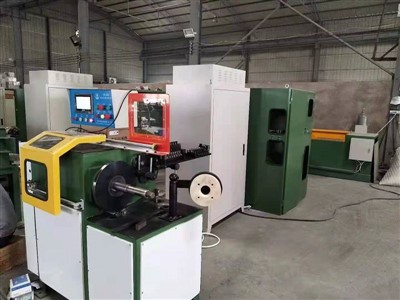
Hey there! I’m a supplier of Flux-Cored Wire Manufacturing Machines. Today, I wanna chat about the effect of different fluxes on the performance of flux-cored wires produced by our machines. Flux-Cored Wire Manufacturing Machine
Flux-cored wires are super important in the welding industry. They’re used in all sorts of applications, from construction to automotive manufacturing. And the flux inside these wires plays a crucial role in how well they perform.
Let’s start by understanding what flux is. Flux is a substance that’s added to the core of the wire. Its main job is to protect the weld from oxidation and other contaminants. It also helps to improve the arc stability and the quality of the weld.
Now, there are different types of fluxes, and each one has its own unique properties. The most common types are rutile, basic, and metal-cored fluxes.
Rutile fluxes are known for their easy arc starting and smooth arc characteristics. They produce a weld that has good appearance and is relatively easy to control. This makes them a popular choice for general-purpose welding. When we use a Flux-Cored Wire Manufacturing Machine to produce wires with rutile fluxes, the resulting wires are great for welding thin to medium-thickness materials. They’re also suitable for both flat and horizontal welding positions.
The effect of rutile fluxes on the performance of the wires is mainly seen in the bead shape and the slag removal. The slag produced by rutile fluxes is thin and easy to remove, which means less post-weld cleaning. This can save a lot of time and effort, especially in large-scale welding projects.
Basic fluxes, on the other hand, are a bit more specialized. They’re known for producing high-quality welds with excellent mechanical properties. Basic fluxes contain a high percentage of calcium carbonate and other alkaline materials. These materials help to remove impurities from the weld and improve its toughness and strength.
When we use our Flux-Cored Wire Manufacturing Machine to make wires with basic fluxes, the wires are typically used for welding high-strength steels and in applications where the weld quality is of utmost importance. However, basic fluxes can be a bit more difficult to work with compared to rutile fluxes. They require a more stable arc and proper shielding gas to achieve the best results.
The slag produced by basic fluxes is thicker and more difficult to remove. But the trade-off is that the welds have better mechanical properties. In some cases, the improved strength and toughness of the welds can make up for the extra effort in slag removal.
Metal-cored fluxes are a bit different from rutile and basic fluxes. They contain a high percentage of metal powders, which contribute to the deposition rate of the weld. Metal-cored fluxes are great for high-speed welding and for welding thick materials.
When our Flux-Cored Wire Manufacturing Machine produces wires with metal-cored fluxes, the resulting wires can deposit a large amount of weld metal in a short period of time. This can significantly increase the productivity of the welding process. However, metal-cored fluxes also produce more spatter compared to rutile and basic fluxes. So, proper ventilation and spatter control measures are necessary when using these wires.
Another factor to consider is the effect of the flux on the wire’s corrosion resistance. Different fluxes can have different impacts on how well the weld resists corrosion. For example, some fluxes contain elements like chromium and nickel, which can improve the corrosion resistance of the weld.
In the case of our Flux-Cored Wire Manufacturing Machine, we can adjust the composition of the flux to meet the specific corrosion resistance requirements of our customers. This allows us to produce wires that are suitable for use in different environments, such as marine or chemical industries.
The moisture content of the flux is also an important factor. Moisture in the flux can cause porosity in the weld, which can weaken the weld and reduce its quality. Our manufacturing process includes strict control of the moisture content in the flux to ensure that the wires we produce have high-quality welds.
We also pay attention to the particle size of the flux. The particle size can affect the flowability of the flux and the performance of the wire. A proper particle size ensures that the flux is evenly distributed in the wire and that it can function effectively during the welding process.
In addition to the type of flux, the ratio of the flux to the wire’s core also matters. A higher flux ratio can provide better protection for the weld, but it can also affect the wire’s feeding characteristics. Our Flux-Cored Wire Manufacturing Machine is designed to produce wires with the optimal flux-to-core ratio, taking into account the specific requirements of the application.
Now, I know you might be thinking, "How do I choose the right flux for my welding needs?" Well, it depends on a few factors. First, consider the type of material you’re welding. If you’re welding thin materials, rutile fluxes might be a good choice. If you’re working with high-strength steels, basic fluxes could be more suitable. And if you need high-speed welding for thick materials, metal-cored fluxes might be the way to go.
You also need to think about the welding position. Some fluxes are better suited for flat and horizontal welding, while others can be used in all positions. And don’t forget about the corrosion resistance requirements of your application.
As a supplier of Flux-Cored Wire Manufacturing Machines, we’re here to help you make the right choice. We have a team of experts who can provide you with advice on the best flux for your specific needs.
If you’re in the market for a Flux-Cored Wire Manufacturing Machine or if you have any questions about the effect of different fluxes on the performance of flux-cored wires, don’t hesitate to reach out. We’d love to have a chat with you and discuss how we can meet your requirements.
In conclusion, different fluxes have a significant impact on the performance of flux-cored wires produced by our Flux-Cored Wire Manufacturing Machine. By understanding the properties of each type of flux and how they affect the weld, you can make an informed decision and choose the right wire for your welding projects.
Steel Strip Processing Machinery References:
- Welding Handbook, American Welding Society
- Flux-Cored Arc Welding: Principles and Applications, various industry publications
Three Water Machinery Co., Ltd.
Three Water Machinery Co., Ltd. is one of the most reliable manufacturers and suppliers of flux-cored wire manufacturing machine in China. With abundant experience, we warmly welcome you to buy advanced equipment for sale here and get quotation from our factory. Contact us for more details.
Address: No.15, Jiaye Road, Liuanzhuang Industrial Park, Beichen District, Tianjin, China
E-mail: sales@eqet.com
WebSite: https://www.eqet.com/
