What is the modulus of elasticity of an aluminum tube?
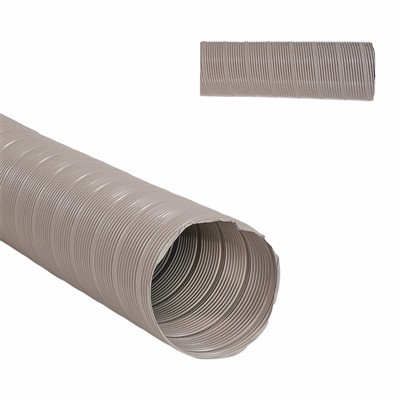
As a supplier of aluminum tubes, I often encounter inquiries from customers about various technical aspects of our products. One question that comes up quite frequently is about the modulus of elasticity of an aluminum tube. In this blog post, I’ll delve into what the modulus of elasticity is, its significance for aluminum tubes, and how it affects the performance of our products. Aluminum Tube
Understanding the Modulus of Elasticity
The modulus of elasticity, also known as Young’s modulus, is a fundamental property of materials that measures their stiffness. It is defined as the ratio of stress (force per unit area) to strain (deformation per unit length) within the elastic range of a material. In simpler terms, it tells us how much a material will stretch or compress when a force is applied to it, and how well it will return to its original shape once the force is removed.
Mathematically, the modulus of elasticity (E) is expressed as:
[E=\frac{\sigma}{\epsilon}]
where (\sigma) is the stress and (\epsilon) is the strain. The unit of the modulus of elasticity is typically pascals (Pa) or gigapascals (GPa).
For aluminum, the modulus of elasticity is relatively consistent across different alloys, with an average value of around 70 GPa. This value can vary slightly depending on the specific alloy composition, heat treatment, and manufacturing process.
Significance of the Modulus of Elasticity for Aluminum Tubes
The modulus of elasticity plays a crucial role in determining the mechanical behavior of aluminum tubes. Here are some key aspects where it has a significant impact:
-
Deflection and Bending Resistance
- When an aluminum tube is subjected to a load, such as a bending force, the modulus of elasticity determines how much it will deflect. A higher modulus of elasticity means that the tube will be stiffer and less likely to bend under a given load. This is important in applications where dimensional stability is critical, such as in structural components or precision machinery.
- For example, in a building framework, aluminum tubes with a higher modulus of elasticity can better withstand the weight and forces exerted on them, reducing the risk of excessive deflection and ensuring the overall stability of the structure.
-
Vibration and Resonance
- The modulus of elasticity also affects the natural frequency of vibration of an aluminum tube. A higher modulus of elasticity results in a higher natural frequency, which means that the tube is less likely to resonate at certain frequencies. This is important in applications where vibration can cause problems, such as in automotive exhaust systems or aerospace components.
- By choosing aluminum tubes with an appropriate modulus of elasticity, engineers can design systems that are less prone to vibration-induced failures and noise.
-
Fatigue Resistance
- In applications where the aluminum tube is subjected to repeated loading and unloading, such as in machinery or transportation equipment, the modulus of elasticity can influence its fatigue resistance. A stiffer tube with a higher modulus of elasticity is generally more resistant to fatigue cracking, as it can better distribute the stresses caused by cyclic loading.
- This is particularly important in applications where the tube is expected to have a long service life and withstand a large number of loading cycles.
Factors Affecting the Modulus of Elasticity of Aluminum Tubes
While the average modulus of elasticity for aluminum is around 70 GPa, there are several factors that can cause variations in this value for aluminum tubes:
-
Alloy Composition
- Different aluminum alloys have different chemical compositions, which can affect their modulus of elasticity. For example, alloys that contain elements such as copper, magnesium, or zinc may have a slightly higher or lower modulus of elasticity compared to pure aluminum.
- As a supplier, we offer a wide range of aluminum tube alloys to meet the specific requirements of our customers. We can provide detailed information about the modulus of elasticity of each alloy to help our customers make the right choice for their applications.
-
Heat Treatment
- Heat treatment processes, such as annealing, quenching, and tempering, can also have an impact on the modulus of elasticity of aluminum tubes. These processes can alter the microstructure of the aluminum, which in turn affects its mechanical properties.
- For example, annealing can reduce the internal stresses in the tube and increase its ductility, while quenching and tempering can increase its strength and hardness. The modulus of elasticity may change slightly depending on the specific heat treatment process used.
-
Manufacturing Process
- The manufacturing process of the aluminum tube can also influence its modulus of elasticity. For example, extrusion is a common method for producing aluminum tubes, and the extrusion process can affect the grain structure and orientation of the aluminum, which can in turn affect its mechanical properties.
- Other manufacturing processes, such as drawing or rolling, can also have an impact on the modulus of elasticity. As a supplier, we have strict quality control measures in place to ensure that our aluminum tubes are manufactured to the highest standards and have consistent mechanical properties.
Measuring the Modulus of Elasticity of Aluminum Tubes
There are several methods for measuring the modulus of elasticity of aluminum tubes. One common method is the tensile test, where a sample of the tube is subjected to a gradually increasing tensile force until it reaches its yield point. The stress and strain are measured during the test, and the modulus of elasticity can be calculated using the formula mentioned earlier.
Another method is the ultrasonic method, which uses ultrasonic waves to measure the velocity of sound in the aluminum tube. The modulus of elasticity can then be calculated based on the relationship between the velocity of sound and the mechanical properties of the material.
As a supplier, we can provide our customers with test reports and certificates that include the modulus of elasticity and other mechanical properties of our aluminum tubes. This ensures that our customers have the necessary information to make informed decisions about the suitability of our products for their applications.
Conclusion
In conclusion, the modulus of elasticity is an important property of aluminum tubes that affects their mechanical behavior and performance. As a supplier of aluminum tubes, we understand the significance of this property and strive to provide our customers with high-quality products that meet their specific requirements.
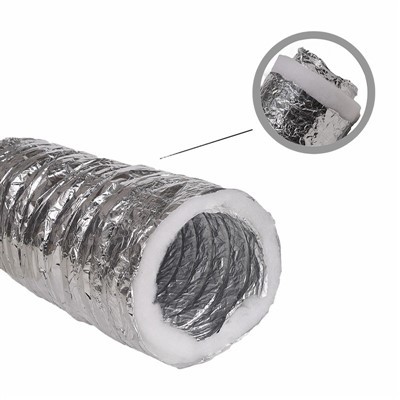
Insulated Air Duct If you are in the market for aluminum tubes and have any questions about the modulus of elasticity or other technical aspects of our products, please feel free to contact us. We have a team of experienced professionals who can provide you with detailed information and guidance to help you make the right choice for your applications. We look forward to the opportunity to work with you and provide you with the best aluminum tube solutions.
References
- Callister, W. D., & Rethwisch, D. G. (2018). Materials Science and Engineering: An Introduction. Wiley.
- ASM Handbook Committee. (2000). ASM Handbook, Volume 2: Properties and Selection: Nonferrous Alloys and Special-Purpose Materials. ASM International.
Dongyang Hstube Co., Ltd.
As one of the leading aluminum tube manufacturers and suppliers in China, we warmly welcome you to wholesale cheap aluminum tube for sale here from our factory. If you have any enquiry about free sample, please feel free to email us. Quality products and reasonable price are available.
Address: NO.5 CHENGDONG ECOLOGICAL INDUSTRIAL ZONE, DONGYANG, ZHEJIANG, CHINA.
E-mail: sales@hstube.com
WebSite: https://www.ductword.com/
